
Source TOI
WASHINGTON D.C. — President Donald Trump signaled a potential diplomatic breakthrough with Iran on Monday, even as a massive U.S. naval task force reached the region to ramp up pressure on the Islamic Republic.
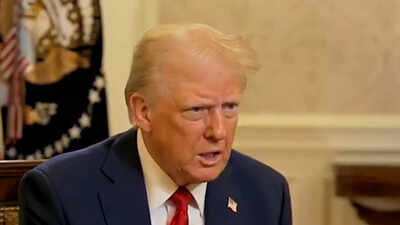
In an exclusive interview with Axios, the President described the current standoff with Tehran as being “in flux,” confirming that he has authorized the deployment of a “big armada” to the Middle East—a force he boasted is “bigger than Venezuela.” The fleet is anchored by the arrival of the USS Abraham Lincoln carrier strike group, which entered the U.S. Central Command (CENTCOM) area of responsibility on Monday.
“They Want to Talk”
Despite the visible build-up of military hardware, including F-35C fighter jets and Tomahawk-capable destroyers, Trump maintained that his ultimate goal is a negotiated settlement.
“They want to make a deal. I know so,” Trump said during the interview. “They called on numerous occasions. They want to talk.”
The President’s comments follow weeks of escalating tensions sparked by a brutal crackdown on anti-government protesters within Iran, which human rights groups estimate has resulted in thousands of deaths. While Trump had previously threatened “very strong” military action if the violence continued, he appears to be pivoting toward “coercive deterrence”—using the threat of the carrier group to force Tehran to the table.
The Cost of a Deal
While Tehran has signaled a willingness to engage in indirect talks, the White House has laid out a stringent list of demands that any new “Trump-era” deal must include:
Nuclear Halts: A total ban on independent uranium enrichment and the removal of existing stockpiles.
Missile Caps: Strict limits on Iran’s long-range ballistic missile program.
Proxy Rollback: A cessation of support for regional militant groups.
U.S. Special Envoy Steve Witkoff emphasized last week that while diplomacy is the preferred path, the military option remains “on the table.”
Regional Hesitation
The “armada”—which includes the destroyers USS Frank E. Petersen Jr. and USS Spruance—arrives at a delicate time. Several regional allies, including the United Arab Emirates, have recently signaled they will not allow their airspace to be used for offensive strikes against Iran, fearing a wider regional conflagration.
By placing the carrier group in international waters, the Trump administration has effectively bypassed the need for local basing permissions, providing the President with what he calls “maximum flexibility.”
“We have a massive fleet heading in that direction, and maybe we won’t have to use it,” Trump told reporters. “We’ll see what happens.”









