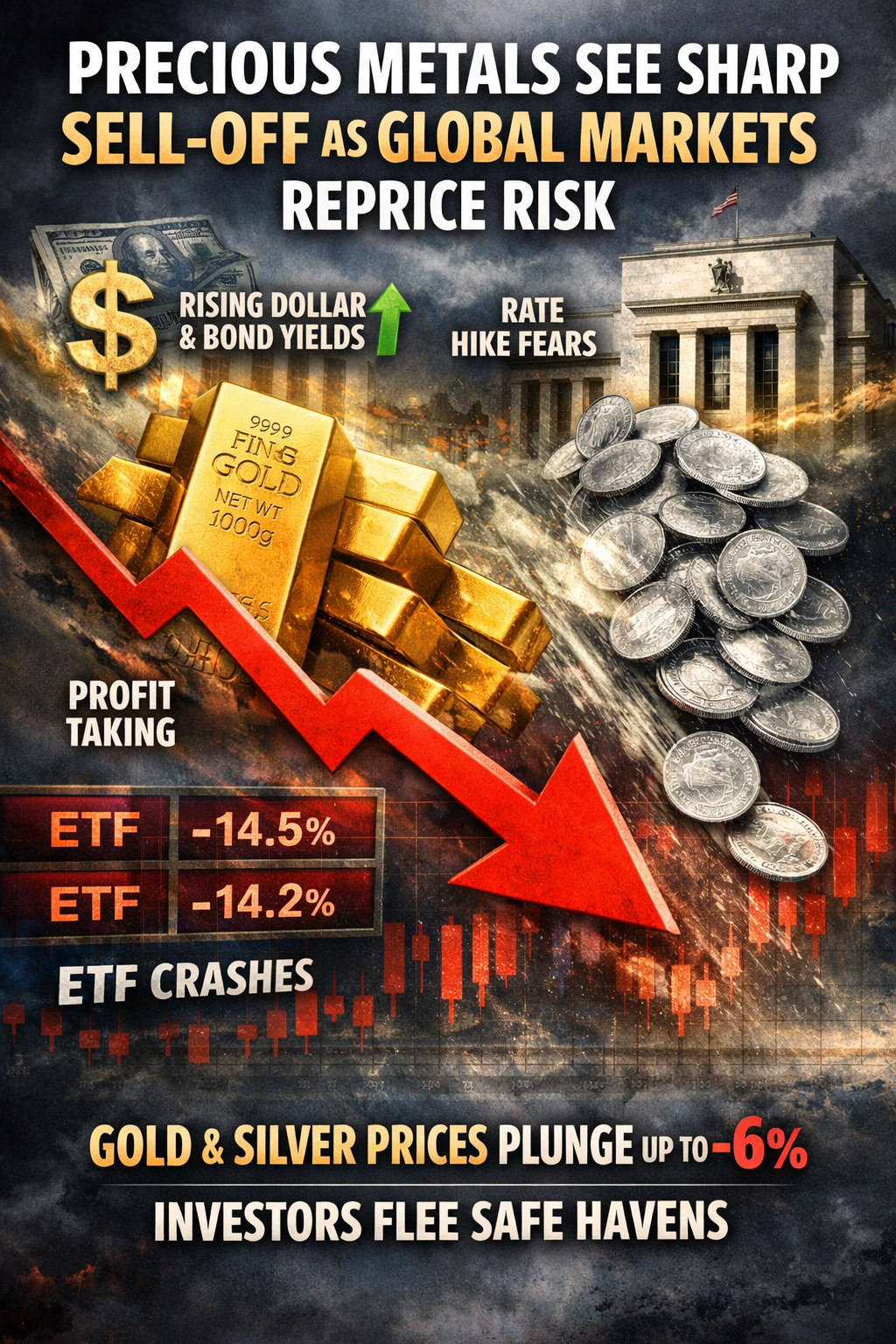
Gold and silver prices witnessed a steep correction, falling by as much as 6% in a short span, while precious metal exchange-traded funds (ETFs) plunged over 14%, rattling investors who had flocked to safe-haven assets only weeks ago. The sudden downturn comes amid a combination of global macroeconomic shifts, profit booking, and changing expectations around interest rates.
One of the primary triggers behind the sell-off is the strengthening of the US dollar. As the dollar gains ground against major global currencies, commodities priced in dollars — including gold and silver — tend to become more expensive for overseas buyers, dampening demand. This has put immediate pressure on precious metal prices across global markets.
Rising bond yields have also played a significant role. Expectations that central banks, particularly the US Federal Reserve, may keep interest rates higher for longer have reduced the appeal of non-yielding assets such as gold and silver. Investors are increasingly rotating funds toward interest-bearing instruments, leading to outflows from metal-backed ETFs.
Another factor contributing to the sharp fall is aggressive profit booking. Gold and silver had rallied strongly over recent months on geopolitical tensions and inflation concerns. With prices near record or multi-month highs, many investors chose to lock in gains, accelerating the decline.
ETFs tracking gold and silver bore the brunt of the sell-off, falling more than the underlying metal prices. Analysts attribute this to high retail participation and leveraged positions in ETFs, which tend to amplify market moves during periods of volatility.
Market experts believe the near-term outlook for precious metals may remain volatile, driven by global economic data, central bank signals, and currency movements. However, some analysts argue that long-term fundamentals such as geopolitical uncertainty and diversification needs could still support gold and silver prices once the current correction stabilizes.