
Source HT
NEW DELHI – After a ten-year hiatus, India has officially re-opened its highest level of institutional dialogue with the Arab world. The 2nd India-Arab Foreign Ministers’ Meeting (IAFMM) convened in New Delhi today, January 31, 2026, marking a pivotal shift in India’s “Link West” policy.
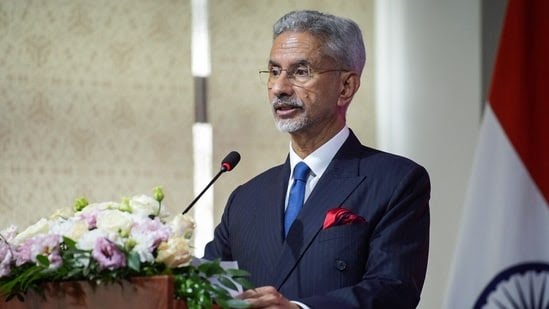
Co-chaired by Indian External Affairs Minister Dr. S. Jaishankar and his counterpart from the United Arab Emirates, the summit welcomed representatives from all 22 member states of the Arab League. This historic gathering is the first of its kind to be hosted on Indian soil, following the inaugural 2016 session in Manama, Bahrain.
Key Attendees: Who is at the Table?
The halls of New Delhi saw a significant turnout of regional heavyweights and emerging leaders:
The Arab League: Secretary General Ahmed Aboul Gheit led the delegation, emphasizing the pan-Arab commitment to the forum.
High-Level Ministers: Foreign Ministers from Egypt, Qatar, Sudan, Palestine, Somalia, Comoros, and Libya were among the first to arrive.
Strategic Representation: Saudi Arabia was represented by its Deputy Minister for Multilateral International Affairs, while Kuwait, Jordan, and Bahrain sent senior plenipotentiaries.
A Notable Return: Speculation surrounded the participation of the Syrian Foreign Minister, potentially marking the first ministerial contact between Delhi and Damascus since the recent political transitions in Syria.
Why the Meeting Matters: The Three Pillars
The decade-long gap since the last meeting has seen the global landscape transform. For India, this summit is not just a diplomatic formality; it is a strategic necessity.
1. Energy and Economic Interdependence
India remains one of the largest consumers of Arab energy. The Arab League nations account for:
95% of India’s LPG imports.
60% of its LNG and 47% of its crude oil.
Over $240 billion in total annual bilateral trade.
2. Regional Stability and Gaza
The crisis in Palestine took center stage. Prime Minister Narendra Modi, while receiving the delegation, reaffirmed India’s support for a two-state solution and welcomed the Gaza Peace Plan. With most of India’s external trade passing through the Suez Canal and the Red Sea, regional peace is directly tied to India’s economic security.
3. Strategic Corridors
The meeting serves as a platform to push forward the India-Middle East-Europe Economic Corridor (IMEC). By strengthening ties with the Arab League, India aims to build a resilient supply chain that bypasses traditional geopolitical bottlenecks.
Looking Ahead
The ministers identified five “priority verticals” for the coming decade: Economy, Energy, Education, Media, and Culture. With over 9 million Indians living and working in Arab nations, the human element remains the strongest bond between the two regions.
“Nowhere is the global transformation more apparent than in West Asia,” stated Dr. Jaishankar during the opening remarks. “The landscape has undergone a dramatic change, and this impacts us all.”









