
Source tech radar
By Tech Insights Bureau
In the quest for a clutter-free lifestyle, millions of smartphone users have ditched traditional cables for the sleek convenience of Qi-standard wireless charging pads. But as the technology becomes a standard feature in everything from iPhones to budget Android devices, a polarizing question has emerged among tech enthusiasts and engineers alike: Is this convenience slowly killing our batteries?
Scientists and battery experts are now weighing in, revealing that while wireless charging isn’t exactly a “phone killer,” it does introduce physical stressors that traditional wired charging avoids.
The Heat Factor: Battery Enemy Number One
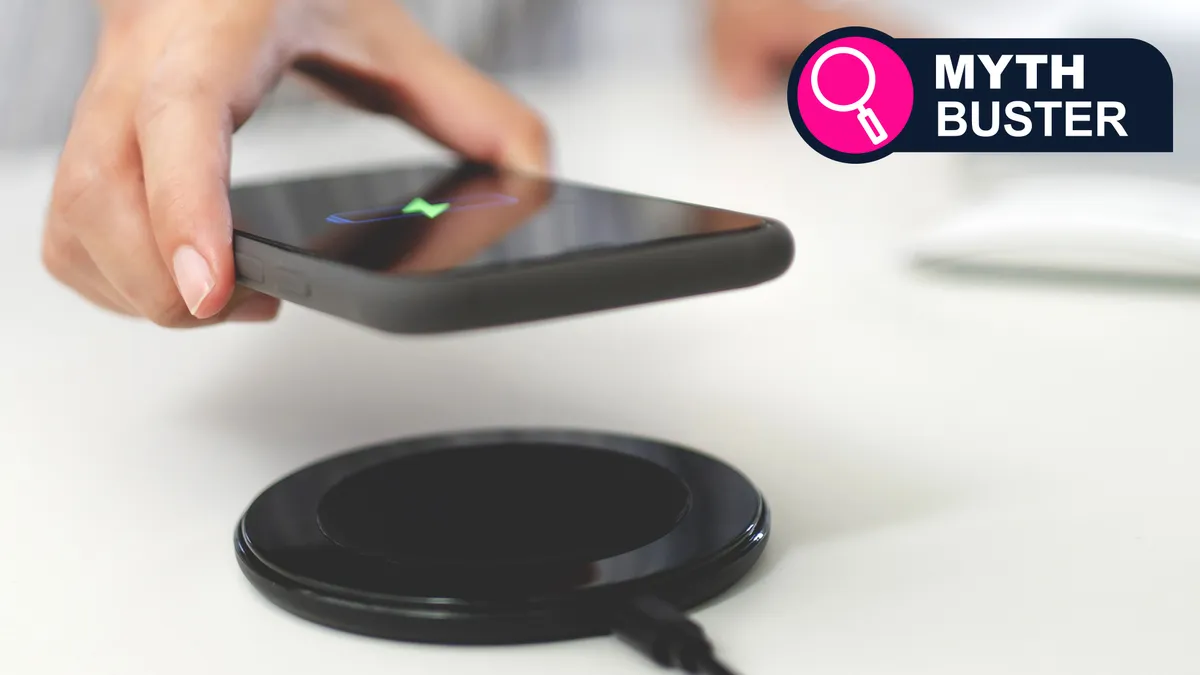
The primary concern cited by researchers is not the electricity itself, but heat. Wireless charging works via inductive coupling. An electromagnetic field transfers energy between two coils—one in the charger and one in the phone.
“The efficiency of wireless charging is significantly lower than wired charging,” explains Dr. Aris Mushtaq, a thermal dynamics researcher. “A substantial amount of that lost energy is converted into heat. Because the phone is sitting directly on a warm charging pad, it cannot dissipate that heat effectively.”
Lithium-ion batteries are notoriously sensitive to high temperatures. Persistent exposure to heat during charging cycles can accelerate the chemical degradation of the battery’s internal components, leading to a faster loss of total capacity over time.
The “Full Charge” Paradox
Another issue identified by experts involves how we use wireless chargers. Because they are so convenient, many users keep their phones on a charging stand throughout the entire workday or on a nightstand all night.
Research suggests that keeping a battery at 100% capacity for extended periods—referred to as “trickle charging”—stresses the battery cells. While modern smartphones have software to manage this, the ease of wireless charging encourages users to keep their devices topped off more frequently than necessary, shortening the overall lifespan of the battery’s charge cycles.
The Case for Going Cable-Free
Despite the thermal concerns, scientists point out that wireless charging isn’t all bad news for your hardware. One of the most common reasons for phone repairs is a broken charging port.
“Mechanical wear and tear is a major factor in device longevity,” says hardware engineer Sarah Jenkins. “By using wireless charging, you eliminate the physical stress of plugging and unplugging a cable, which prevents the charging port from loosening or shorting out over time.”
Furthermore, newer “Fast Wireless Charging” standards and improved cooling fans built into premium charging pads are beginning to mitigate the heat issues that plagued earlier versions of the technology.
The Verdict: How to Charge Safely
So, should you throw away your charging pad? Not necessarily. Experts suggest a balanced approach to keep your battery healthy:
Alignment Matters: Ensure your phone is perfectly centered on the coil. Misalignment causes the charger to work harder and generate more wasted heat.
Remove the Case: Heavy-duty or plastic cases can trap heat. Removing the case during a long wireless charge can help the device stay cool.
Avoid the “Always On” Habit: Don’t leave your phone on a wireless pad all day if it’s already at 80% or 90%.
Use Wired for Speed: If you need a quick boost, use a cable. It’s faster and more energy-efficient, generating less heat per percentage of charge gained.
Ultimately, while wireless charging may degrade a battery slightly faster than a cable, the difference for most users over a standard two-year upgrade cycle is marginal. However, for those looking to keep their devices for four or five years, sticking to the cord might be the smartest move.









