
Source first post
ISLAMABAD – A wave of “gallows humor” and sharp political satire has detonated across Pakistani social media this week, following a landmark trade agreement between the United States and India. The deal, which slashes tariffs on Indian goods to 18%, has left Pakistan—currently facing a 19% rate—wrestling with a sense of diplomatic betrayal and domestic embarrassment.
At the center of the storm is Pakistan’s powerful Army Chief, Field Marshal Asim Munir. Despite months of high-level engagement and public praise from U.S. President Donald Trump, who famously dubbed Munir his “favorite Field Marshal,” critics argue the “special relationship” has failed to yield tangible economic benefits.
The “Mover, Shaker, and Beggars” Narrative
The online backlash was sparked by the optics of the deal. While New Delhi maintained a posture of “strategic autonomy”—often resisting Trump’s public pressure—it walked away with more favorable trade terms. In contrast, Pakistan’s leadership has spent the last year overtly courting the Trump administration.
One viral phrase, “Mover, shaker, and beggars,” has become a shorthand for the public’s frustration. The mockery highlights several key grievances:
The “Salesman” Image: Social media users have reshared images of Field Marshal Munir’s previous visits to Washington, where he reportedly presented rare earth minerals to U.S. officials, a move mocked by opposition senators as “behaving like a salesman.”
The Nobel Gimmick: Critics have poked fun at the repeated, failed attempts by Pakistani circles to nominate Trump for a Nobel Peace Prize, a gesture many now see as hollow flattery that failed to buy leverage.
The 1% Difference: While the tariff gap is numerically small (18% vs 19%), the symbolic weight is massive. Users have treated it like a “scoreboard,” arguing that India’s refusal to “flatter” Trump resulted in a better deal than Pakistan’s policy of “obedience.”
Hierarchy over Arithmetic
For many analysts, the meltdown isn’t about supply chains; it’s about perceived status.
“The India-US deal landed in Pakistan like a plate smashing in a silent room,” noted one regional observer. “It punctured the elite narrative that Pakistan was becoming the ‘indispensable partner’ while India-US ties were fraying.”
The frustration is compounded by the domestic climate. Supporters of jailed former Prime Minister Imran Khan have been particularly vocal, using the trade deal to argue that the current military-backed government has traded national dignity for international photo-ops without securing any economic relief for the struggling population.
A Failed Charm Offensive?
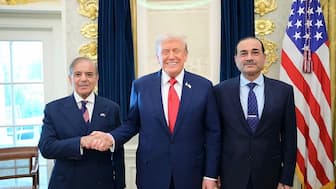
The “Field Marshal” title itself, granted to Munir through a constitutional amendment in late 2025, has become a target of satire. Memes depicting Munir and Prime Minister Shehbaz Sharif as “waiting in the lobby” while President Trump and Prime Minister Modi finalize deals have flooded platforms like X and Instagram.
As the dust settles, the mood in Islamabad is one of uncomfortable self-reflection. The trade deal has served as a mirror, suggesting that in the transaction-heavy world of current U.S. foreign policy, personal praise and “favorite” status are no substitute for economic gravity.









