
Source financial Times
Muscat, Oman — The United States and Iran engaged in a critical round of indirect talks in the Omani capital on Friday, a rare diplomatic push to calm escalating tensions that have raised fears of broader conflict across the Middle East.
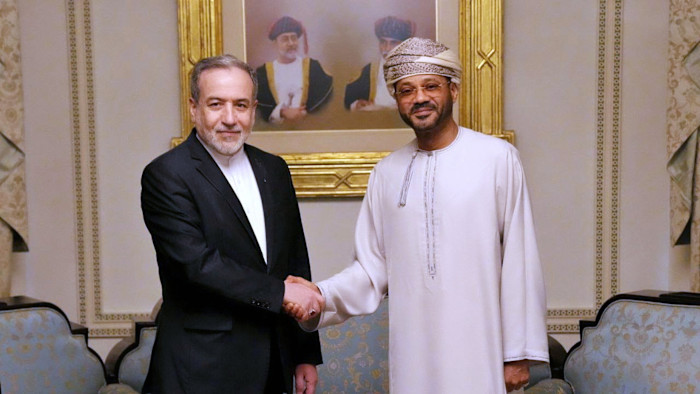
Senior officials from both sides met under Omani mediation, marking the first formal negotiations since a series of military confrontations and political crises in the region. Iranian Foreign Minister Abbas Araghchi described the discussions as a “good start,” with both delegations expressing cautious optimism about continuing dialogues, even as deep disagreements persist.
The talks came amid a backdrop of heightened tensions fuelled by a U.S. military buildup in the Gulf and recent confrontations at sea, including the downing of an Iranian drone by U.S. forces near the USS Abraham Lincoln and harassment of commercial vessels in strategic waterways.
Context: A Complex and Tense Diplomatic Moment
The negotiations focused primarily on Iran’s nuclear programme, which remains a central point of contention. Tehran has insisted on narrowing the agenda to its nuclear activities, while Washington is pressing for broader discussions that could also touch on Iran’s ballistic missile capabilities and support for regional armed groups.
For the first time, U.S. military leadership was visibly involved in the diplomatic effort, with the head of U.S. Central Command participating in discussions, underscoring how intertwined security concerns have become with diplomatic outreach.
Regional and Global Stakes
Both nations have powerful incentives to avoid outright war. Iran faces internal pressures, including public unrest and economic strain, while the U.S. is balancing calls for de-escalation with demands for concrete commitments on nuclear oversight and regional behaviour. Observers note that a breakthrough remains difficult, given long-standing mistrust and divergent strategic priorities.
Despite these challenges, the continuation of talks — even if indirect and cautious — offers a potential pathway to reduce immediate risks of military conflict and create room for future agreements.









