Source The CSR journal
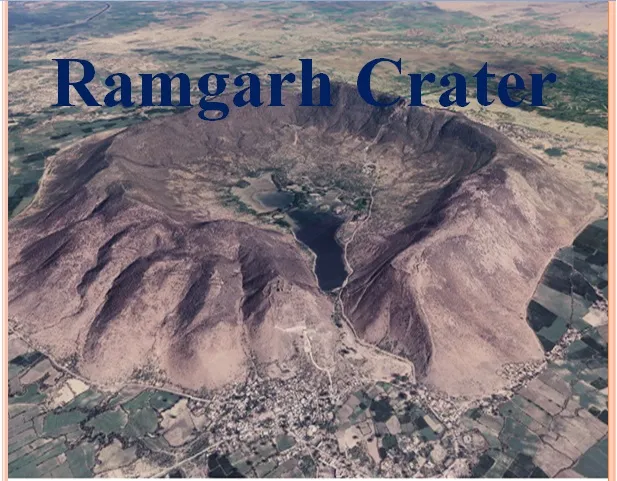
BARAN, RAJASTHAN – In a breakthrough that settles a decades-old geological debate, researchers have finally discovered definitive “fingerprints” of a meteorite at the Ramgarh structure in Rajasthan. The findings officially elevate the site from a curious local landmark to one of the world’s rare confirmed impact craters.
For years, the 3.5-kilometer wide, ring-shaped ridge in the Baran district was often mistaken for a volcanic caldera or a simple geological fold. However, a team of scientists has recently identified specific geochemical signatures and meteoritic fragments within the crater’s rim that could only have been forged in the fire of a celestial collision.
The Evidence: Beyond Earthly Geology
The confirmation rests on the discovery of minerals and physical markers that require the extreme pressure and temperature of a high-speed impact:
Shatter Cones: Distinctive cone-shaped fractures in the rocks that only form under the intense shockwaves of an explosion or impact.
Impact Glass (Tektites): Droplets of Earth’s crust that were instantly melted and flung into the air, cooling into glass before hitting the ground.
Nickel-Iron Traces: High concentrations of siderophile elements—metals that are rare on Earth’s surface but common in “Iron” meteorites.
A Rare Global Site
With this discovery, the Ramgarh Crater joins the Lonar Lake in Maharashtra as one of India’s premier impact sites. While the Earth is bombarded by space debris daily, most evidence is erased by erosion, tectonic activity, or vegetation. Ramgarh’s preservation offers a unique window into the Earth’s “recent” geological history—estimated by some experts to have occurred roughly 165 million years ago.
“This isn’t just a win for geology; it’s a massive boost for astro-tourism in India,” says one lead researcher. “We are looking at a site where the heavens literally touched the Earth, leaving a permanent scar that we can finally read.”
Impact on Science and Tourism
Local authorities are already looking at ways to protect the site. Geologists believe that further excavation could reveal more about the size and speed of the asteroid, potentially helping us understand the frequency of such events in the Indian subcontinent.
For the people of Baran, the “Ramgarh Structure” is no longer just a hill; it is a cosmic monument.