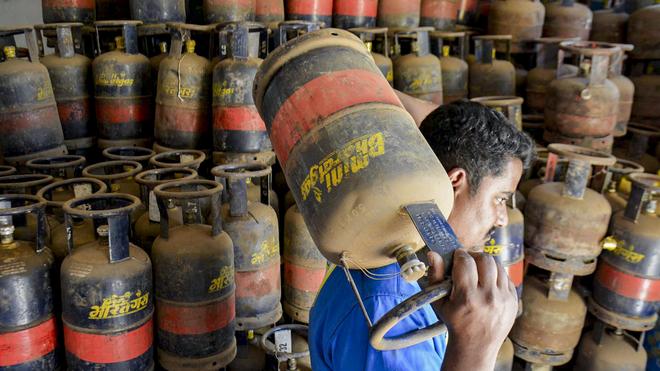
Source The Hindu
NEW DELHI – In a significant blow to household finances, oil marketing companies (OMCs) announced a steep hike in the price of domestic Liquefied Petroleum Gas (LPG) cylinders, effective March 7, 2026. The price of a 14.2-kg non-subsidized cylinder has been increased by ₹60, a move directly attributed to the volatile energy market triggered by the escalating conflict in West Asia.
New Rates Across Major Cities
Following the revision, a domestic LPG cylinder in the national capital, Delhi, now costs ₹913, up from ₹853. This marks the highest price for cooking gas since August 2023. Other metropolitan cities saw similar jumps:
City New Price (14.2 kg) Previous Price
Delhi ₹913.00 ₹853.00
Mumbai ₹912.50 ₹852.50
Kolkata ₹939.00 ₹879.00
Chennai ₹928.50 ₹868.50
Commercial LPG prices have also been hit even harder, with the 19-kg cylinder used by hotels and restaurants seeing a hike of ₹115, bringing the price in Delhi to ₹1,883.
The Geopolitical Trigger
The price revision comes as the conflict in West Asia enters its second week, causing Brent crude prices to surge past $87 per barrel. Industry experts point to the strategic “chokepoint” of the Strait of Hormuz as a primary concern; with nearly 20% of the world’s petroleum liquids passing through this waterway, any threat of a blockade sends shockwaves through global energy chains.
To mitigate potential shortages, the Indian government has already invoked emergency powers under the Essential Commodities Act, directing domestic refiners to maximize LPG production.
Impact on the Common Man
While the hike is substantial, the government has clarified that the over 10 crore beneficiaries of the Pradhan Mantri Ujjwala Yojana will continue to receive their ₹300 subsidy, providing some cushion for the most vulnerable. However, for the average middle-class household, this is the second increase in less than a year, following a ₹50 hike in April 2025.
Despite the rise, Petroleum Ministry officials maintain that Indian LPG rates remain among the lowest in the region compared to neighboring countries. Furthermore, there has been no change to petrol or diesel prices as of today, providing a small measure of relief to commuters.