Source AI
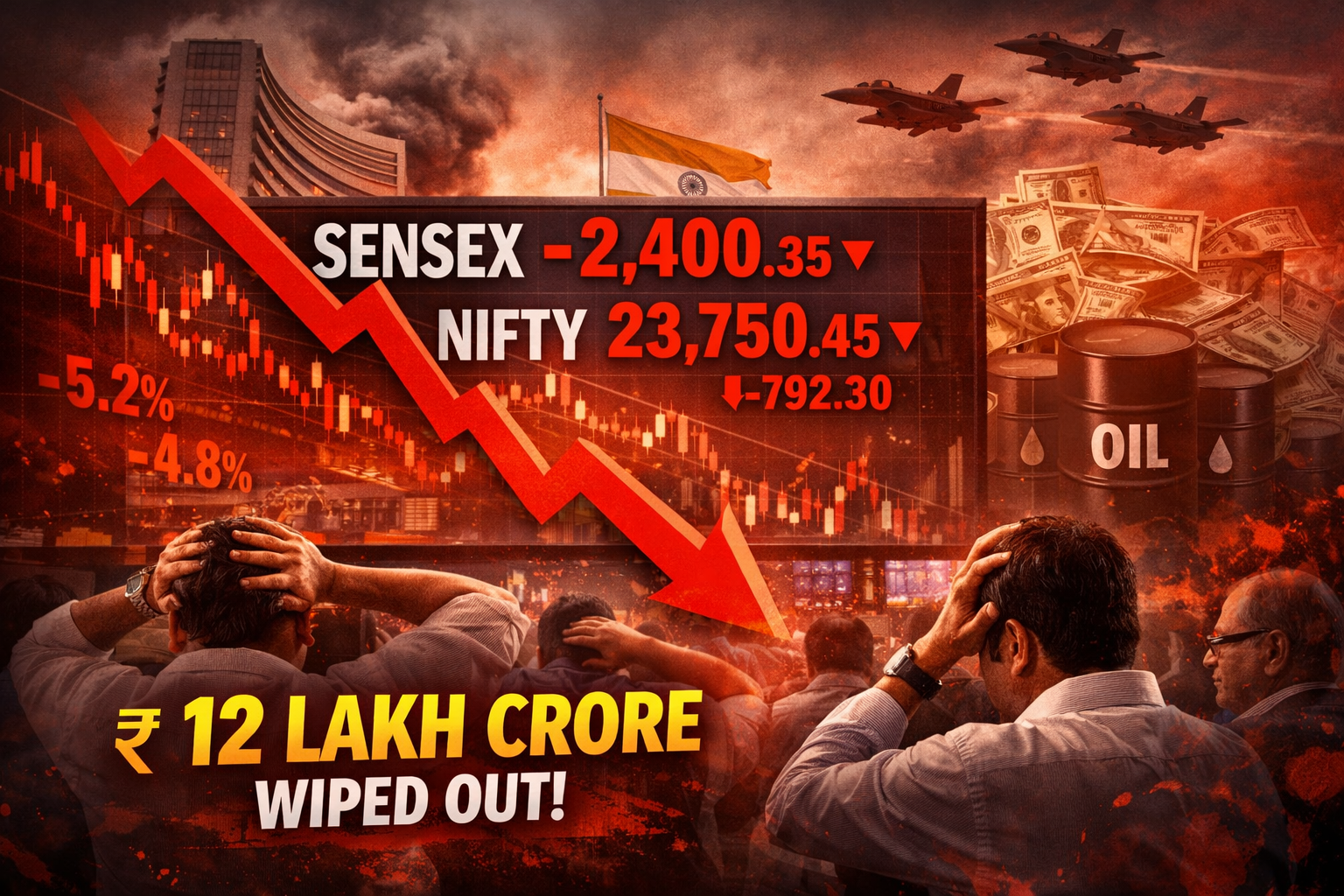
India’s stock markets witnessed a sharp sell-off on Monday, wiping out nearly ₹12 lakh crore in investor wealth in a single trading session. The benchmark indices — the BSE Sensex and Nifty 50 — plunged dramatically as global and domestic concerns triggered widespread panic selling.
The Sensex crashed more than 2,400 points during intraday trading, while the Nifty slipped below the crucial 23,800 mark. The steep fall reflected a broad-based decline across sectors, with banking, IT, and metal stocks leading the losses. Market volatility intensified as investors rushed to book profits and reduce exposure amid growing uncertainty.
Analysts say multiple factors contributed to the sudden market downturn. One major reason was weak global cues, as international markets reacted negatively to rising geopolitical tensions and concerns over economic slowdown. Investors across the world shifted towards safer assets, leading to heavy selling in equities.
Another key factor was rising crude oil prices, which raised fears of higher inflation and increased pressure on India’s import bill. Higher oil prices typically weigh on the economy and corporate profitability, making investors cautious.
Foreign institutional investors (FIIs) were also seen pulling money out of Indian equities, adding further pressure on the markets. Continuous FII outflows often lead to liquidity concerns and trigger sharp declines in benchmark indices.
Profit booking after recent market highs also played a role in the fall. After weeks of strong gains, many investors chose to lock in profits, accelerating the downward momentum.
In addition, concerns over interest rate policies by major central banks, including the possibility of prolonged high interest rates globally, dampened investor sentiment. Higher borrowing costs can slow economic growth and corporate earnings.
Uncertainty related to geopolitical developments and ongoing global conflicts further added to the cautious mood in financial markets. Investors remained wary of sudden shocks that could affect global trade and economic stability.
Despite the sharp decline, market experts believe such corrections are a normal part of the market cycle. They advise investors to stay cautious but not panic, as long-term fundamentals of the Indian economy remain relatively strong.
Market participants will now closely watch global developments, inflation data, and foreign investment trends in the coming days to gauge the next direction of the markets.