Source TOI
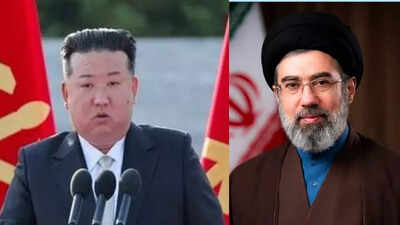
SEOUL — North Korea has officially recognized Mojtaba Khamenei as the new Supreme Leader of Iran, while simultaneously launching a scathing critique of the United States and Israel for what it termed “illegal” military actions that have destabilized the Middle East.
In a statement released via the state-run Korean Central News Agency (KCNA) on Wednesday, a spokesperson for North Korea’s Foreign Ministry affirmed that Pyongyang “respects the right and choice of the Iranian people” following the Iranian Assembly of Experts’ decision to appoint the son of the late Ali Khamenei to the nation’s highest office.
The transition comes in the wake of a devastating conflict sparked by a February 28 joint U.S.-Israeli strike that resulted in the death of former Supreme Leader Ali Khamenei. Pyongyang previously characterized that operation as “gangster-like conduct” and has now escalated its rhetoric, accusing Washington and Tel Aviv of “undermining the foundations of regional peace.”
“We express grave concern and strongly condemn the aggression of the United States and Israel,” the spokesperson said, adding that the military strikes violated Iran’s “political system and territorial integrity.”
The diplomatic endorsement coincides with a show of military force from North Korea. Leader Kim Jong Un reportedly oversaw the test-firing of strategic cruise missiles from the Choe Hyon, the country’s newest destroyer. During the exercise, Kim emphasized the “strategic task” of expanding North Korea’s nuclear deterrent to counter external threats.
Despite the heightened tensions, the geopolitical landscape remains complex. While Pyongyang continues to bolster its naval nuclear capabilities, reports suggest the U.S. administration may be open to reviving high-level talks. Kim Jong Un has recently signaled that the two nations could “get along” provided Washington acknowledges North Korea’s status as a nuclear power—a condition the U.S. has historically rejected.
As the war in the Middle East enters its second week, the aligning interests of Pyongyang and Tehran suggest a deepening of the “anti-imperialist” front, further complicating international efforts to restore stability in the region.