
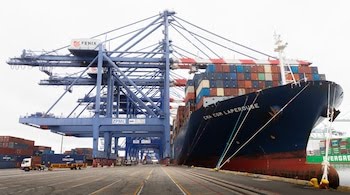
Source money control
NEW DELHI — India’s trade dynamics showed signs of stabilization this month as the merchandise trade deficit narrowed to $27 billion in February, according to the latest data released by the Ministry of Commerce and Industry.
The dip in the deficit—the gap between what a country spends on imports versus what it earns from exports—comes as a relief to policymakers monitoring the stability of the Indian Rupee and the overall current account balance.
Key Drivers of the Narrowing Gap
The improvement in the trade balance was driven by a two-pronged shift in global trade activity:
Resilient Exports: Despite a slowdown in global demand and ongoing geopolitical tensions in the Red Sea, Indian exports in sectors such as engineering goods, electronics, and pharmaceuticals maintained steady momentum.
Controlled Import Growth: A softening in the global prices of certain commodities, alongside a strategic dip in non-essential imports, helped keep the total import bill in check.
Comparative Snapshot
While $27 billion remains a significant figure, the month-on-month narrowing suggests a tightening of the fiscal belt.
Category February Status Trend
Merchandise Exports Steady 🟢 Growth in Electronics
Merchandise Imports Moderating 🟡 Lower Energy Costs
Trade Deficit $27 Billion
Expert Outlook
Economists suggest that while the narrowing deficit is a positive signal, challenges remain on the horizon. “The cooling of the trade gap is a healthy sign for the economy,” says one market analyst. “However, with volatile global oil prices and fluctuating demand in Western markets, maintaining this trajectory will require continued support for domestic manufacturing and diversified export destinations.”
The government remains optimistic that the Production Linked Incentive (PLI) schemes will continue to boost domestic production, further reducing the reliance on high-value imports in the coming fiscal quarters.
Note: These figures are preliminary and subject to revision as final data from the customs departments are integrated.









