
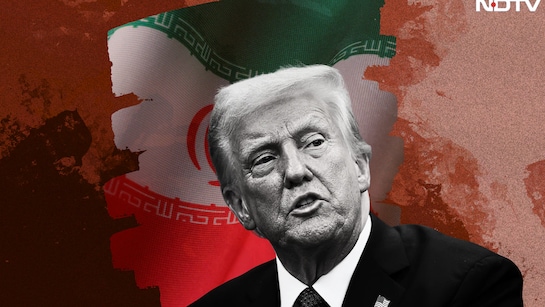
Source NDTV world
In a striking statement that has sparked widespread debate among international leaders, former U.S. President Donald Trump has described NATO as a “paper tiger” without the backing of the United States. The remark, made in a recent post, has reignited discussions about the alliance’s dependence on American military power and financial contributions.
Trump’s comments come at a time of heightened global tensions, with ongoing conflicts and shifting geopolitical alliances placing renewed focus on collective defense systems. He argued that many NATO member states rely heavily on the U.S. for security, claiming that without American involvement, the alliance would struggle to maintain its deterrence capabilities.
The North Atlantic Treaty Organization, commonly known as NATO, was established in 1949 to ensure mutual defense among member countries. Over the decades, it has expanded to include 30+ nations, primarily from Europe and North America. The United States has consistently been its largest contributor in terms of defense spending and military resources.
Trump has long criticized NATO allies for not meeting defense spending targets, urging them to increase their contributions. His latest remarks echo those concerns and suggest a continued skepticism toward multilateral defense commitments.
Reactions from global leaders have been mixed. Some European officials have defended NATO’s strength and unity, emphasizing recent efforts by member states to boost defense budgets and enhance military cooperation. Others, however, acknowledged that the alliance still depends significantly on U.S. leadership.
Security analysts warn that such statements could impact the perception of NATO’s unity at a critical time. They argue that public doubts about the alliance’s strength may embolden adversaries and create uncertainty among member nations.
As global security challenges evolve, Trump’s comments have once again placed NATO’s future and structure under the spotlight, raising important questions about burden-sharing, strategic autonomy, and the balance of power within the alliance.









