
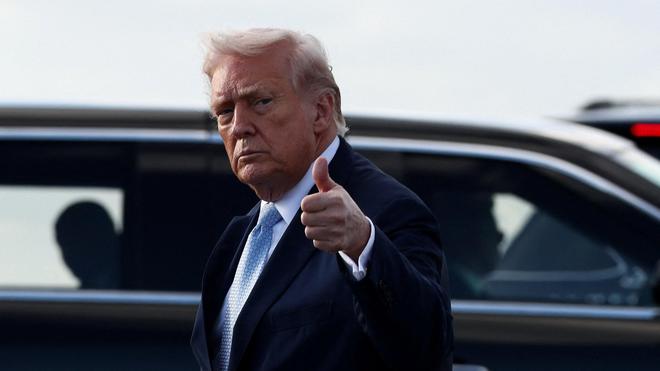
Source The Hindu
WASHINGTON/TEHRAN — In a day of conflicting narratives and high-stakes brinkmanship, U.S. President Donald Trump announced a five-day pause on planned strikes against Iranian energy infrastructure, claiming that “productive” negotiations are underway and that a “regime change” is effectively unfolding in Tehran. However, the Iranian Foreign Ministry has flatly denied these claims, labeling them as “fake news” designed to manipulate global oil markets.
Trump’s Five-Day Ultimatum and Claims of Progress
Speaking to reporters on Monday, President Trump struck a surprisingly optimistic tone regarding the month-long conflict. He revealed that he had instructed the Department of War to postpone strikes on Iran’s vital power plants and energy facilities for a five-day window to allow for a “complete and total resolution” of hostilities.
“We have had very, very good and productive conversations,” Trump stated, asserting that the U.S. is in contact with “reasonable” Iranian representatives. In a subsequent interview with CNBC, the President went further, suggesting that the removal of several high-ranking Iranian officials during the war constitutes a “regime change” in practice.
“There’s automatically a regime change,” Trump remarked, citing the turnover in leadership and the deaths of senior figures since the joint U.S.-Israeli offensive began on February 28.
Tehran’s Rejection: “A Psychological Operation”
The response from Tehran was swift and dismissive. Iranian Foreign Ministry spokesperson Esmaeil Baghaei clarified that while messages had been relayed through “friendly countries” regarding a U.S. request for negotiations, no direct or indirect dialogue has occurred.
Iranian Parliament Speaker Mohammad Bagher Ghalibaf echoed this sentiment, accusing the White House of using “psychological operations” to drive down soaring energy prices and buy time for further military maneuvers.
“No negotiations have been held with the U.S.,” Ghalibaf posted on social media. “These are efforts to escape the quagmire in which the U.S. and Israel are trapped.”
The Shadow of the Strait of Hormuz
The diplomatic confusion comes at a critical moment for the global economy. Iran’s military has repeatedly threatened to “completely close” the Strait of Hormuz—the world’s most vital oil chokepoint—should its power plants be targeted.
Currently, the conflict has:
Sent Brent Crude prices past $115 per barrel, rattling international markets.
Resulted in over 2,000 casualties since the start of the offensive.
Disrupted global aviation and shipping, with Iran reportedly charging vessels a $2 million “sovereign regime” fee for transit.
What Lies Ahead
While the U.S. has paused its specific plan to strike Iranian power plants, military operations elsewhere continue. Israel’s Defense Force reported fresh strikes on Monday targeting Iranian intelligence and missile production facilities.
International mediators, including Pakistan and Turkey, are reportedly working behind the scenes to bridge the gap, but the divide between Trump’s claim of a “deal within reach” and Tehran’s “firm warning” remains vast.









