
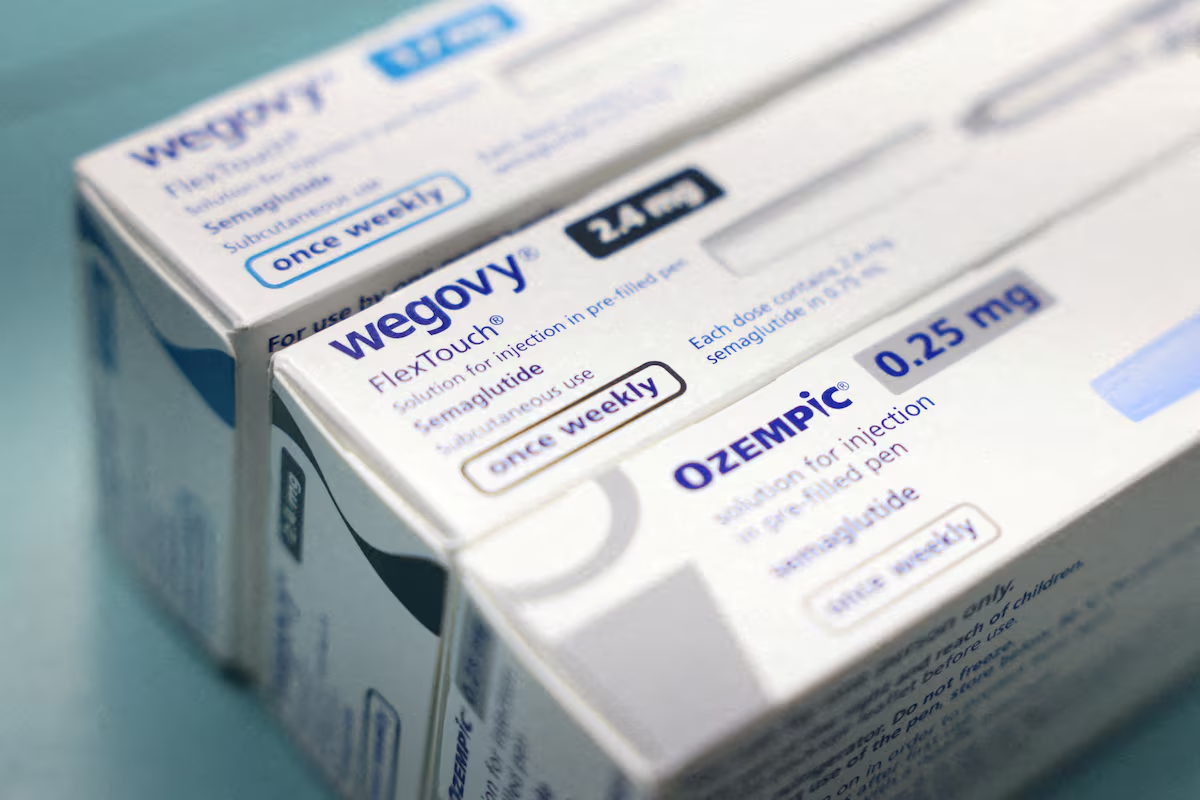
Source Reuters
NEW DELHI — The landscape of metabolic healthcare in India underwent a seismic shift this week as the key patent for semaglutide, the blockbuster molecule behind Novo Nordisk’s Ozempic and Wegovy, expired on March 20, 2026. Within hours, a wave of “branded generics” from India’s pharmaceutical powerhouses flooded the market, slashing treatment costs by as much as 90%.
Industry analysts are calling this the “slum of brands” moment, as over 40 domestic companies—including Sun Pharma, Dr. Reddy’s, Zydus Lifesciences, and Glenmark—have launched more than 50 versions of the drug. This surge aims to address an untapped market of millions struggling with Type 2 diabetes and obesity in the world’s most populous nation.
The Great Price Crash
Before the patent expiry, patients in India paid between ₹8,800 and ₹16,400 per month for imported innovator brands. The new domestic entrants have effectively dismantled this price barrier:
Glenmark (GLIPIQ): Leading the price war with weekly costs starting as low as ₹325 (approx. ₹1,300/month).
Natco Pharma (SEMANAT/SEMAFULL): Launched multi-dose vials starting at ₹1,290 per month.
Sun Pharma (Noveltreat/Sematrinity): Offering a wide range of doses with weekly therapy priced between ₹750 and ₹2,000.
Alkem Laboratories: Introduced pre-filled pens starting at ₹450 per week.
Major Brand Launches at a Glance
Manufacturer Brand Name(s) Format Est. Monthly Cost
Sun Pharma Noveltreat, Sematrinity Injection (5 strengths) ₹3,000 – ₹8,000
Dr. Reddy’s Obeda Disposable Pen ₹4,200
Zydus Semaglyn, Mashema Reusable Pen ₹2,200
Glenmark GLIPIQ Vial & Pen ₹1,300 – ₹1,760
Natco Semanat, Semafull Multi-dose Vial ₹1,290 – ₹1,750
Global Implications
While the United States and Europe remain under patent protection until 2031-32, India has become one of the first major battlegrounds for generic semaglutide. Experts believe this is just the beginning of a global export strategy.
“Lower-cost semaglutide could significantly expand access to effective treatment, particularly in middle-income countries where price has been a major barrier,” said Simon Barquera, President of the World Obesity Federation.
Challenges Ahead
Despite the excitement, medical experts urge caution. Unlike simple pills, semaglutide is a biologic that requires a strict cold chain (refrigeration) and sophisticated delivery devices. There are also concerns regarding “off-label” use for cosmetic weight loss, as these medications are strictly prescription-only and can cause significant gastrointestinal side effects.
As the “Weight-Loss Drug War” intensifies, the Indian market—currently valued at approximately $150 million—is projected to triple by 2030, potentially transforming the country from a global pharmacy into a global hub for metabolic health innovation.









