Source The Hindu
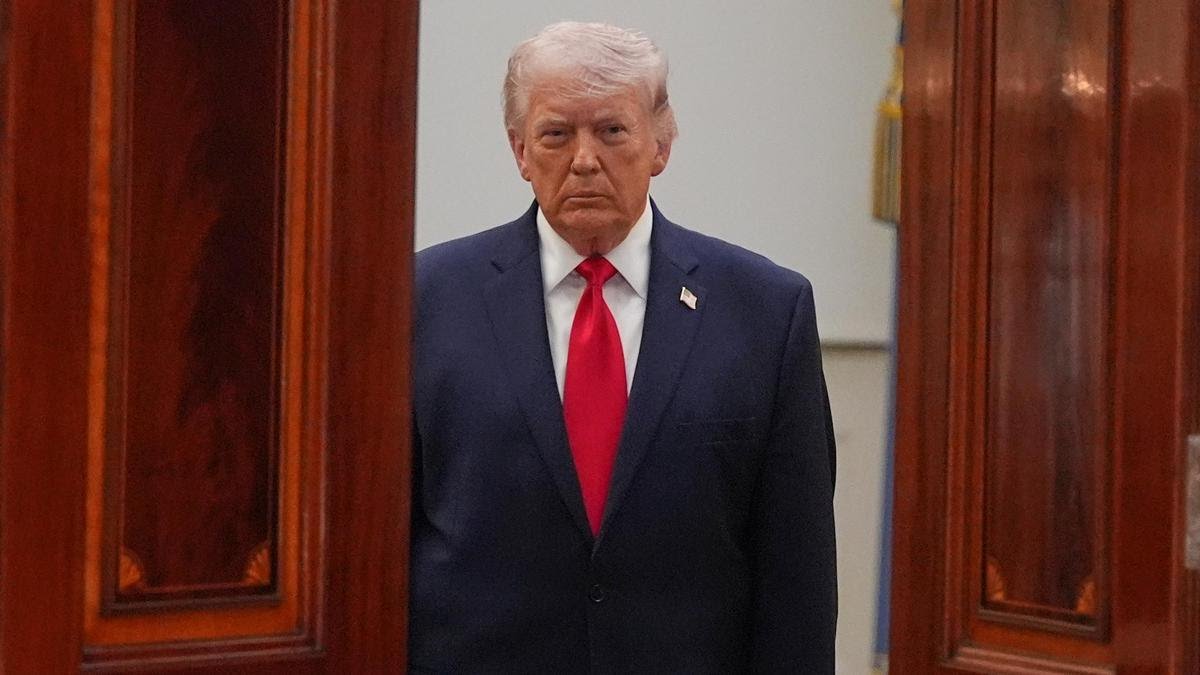
WASHINGTON — In a prime-time address from the White House on Wednesday night, President Donald Trump declared that the month-long military campaign against Iran is “nearing completion,” signaling a pivot from active high-intensity combat toward a coercive and potentially open-ended economic stranglehold.
The 19-minute speech, delivered on the 32nd day of the conflict, attempted to frame the air and sea campaign—dubbed Operation Epic Fury—as a “powerful and brilliant” success. Despite growing international condemnation and a fractured NATO alliance, the President maintained that the United States has achieved its core strategic objectives in record time.
A “New Era” of Military Engagement
Throughout the address, Trump leaned heavily on a narrative of American military efficiency. He contrasted the current operations with the “forever wars” of the past, claiming that in just over a month, the U.S. has managed to “eviscerate” a nation he once called the “bully of the Middle East.”
Degradation of Assets: Trump claimed that Iran’s navy and air force have been “decimated,” rendering the country “no longer a threat” to the American homeland.
The Nuclear Question: While some intelligence reports suggested Iran was still years away from intercontinental capabilities, Trump justified the intensity of the strikes by alleging Iran was “on the verge” of a nuclear breakthrough.
Terminology: Notably, the President continued to refer to the conflict as an “operation” or “excursion” rather than a war, a move analysts suggest is intended to bypass formal Congressional war powers.
The Economic Ultimatum
Despite the talk of “completion,” the President’s rhetoric regarding Iran’s future was anything but conciliatory. He issued a stark warning: if Tehran does not agree to a “total” nuclear and military deal within the next two to three weeks, the U.S. will ramp up its targeting of civilian and economic infrastructure.
“If they don’t strike a deal, we will hit each and every one of their electric generating plants very hard and probably simultaneously,” Trump warned. “We are going to bring them back to the stone ages if that’s what it takes.”
He also addressed the global energy crisis sparked by the conflict, blaming “short-term” gas price hikes on Iranian “hostility.” He urged nations dependent on the Strait of Hormuz to “grab it and cherish it,” suggesting that while the U.S. might wind down its own presence, it has no immediate plan to ensure the waterway reopens for others without significant concessions.
Fractured Alliances and Domestic Skepticism
The speech comes at a time of deep domestic and international division. While the President touted the campaign’s speed, critics were quick to point out the lack of a clear exit strategy.
Key Metric Status/Impact
Duration 32 Days (Current)
U.S. Public Opinion 56% Oppose/Strongly Oppose
Global Impact Massive surge in oil prices; Asian markets volatile
Diplomatic Status U.S. withdrawal from 66 international organizations/treaties
International observers, including the Chatham House think tank, have raised alarms that the administration is “casting aside international law” by normalizing pre-emptive strikes. Meanwhile, the President dismissed concerns from traditional allies, labeling NATO a “paper tiger” and asserting that the U.S. “has all the cards” in the current standoff.
What Comes Next?
The administration has set a loose “two-to-three-week” timetable to wrap up major operations, yet the President left the door open for “spot hits” and continued strikes on Iran’s oil business and power grid.
As the “operation” enters its second month, the world remains on edge. Trump’s message was clear: the U.S. is ready to walk away from the battlefield, but only after leaving Iran with a choice between total capitulation or total darkness.