Source Wion
TEHRAN / WASHINGTON – Tensions in the five-week-old Middle East conflict reached a fever pitch Friday as Iran released a “hit list” of eight major bridges across the Gulf and Jordan. The threat comes as a direct response to a U.S.-Israeli airstrike that leveled the B1 bridge in Karaj—Iran’s tallest and most ambitious infrastructure project.
A Symbolic Strike in Karaj
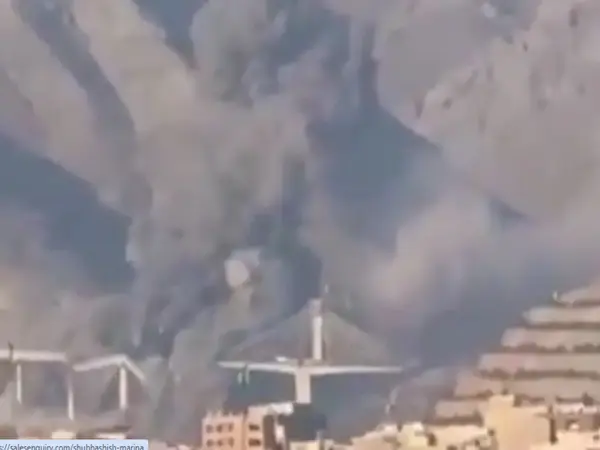
On Thursday, April 2, 2026, U.S. forces targeted the B1 bridge in Alborz Province, roughly 20 miles southwest of Tehran. The structure, which was nearing completion, stood as West Asia’s tallest bridge with a 447-foot (136-meter) central column.
Iranian state media reported that the strike occurred in two waves: an initial blast followed by a second hit as emergency teams arrived. The attack killed at least eight people and wounded 95 others. President Donald Trump later posted footage of the collapsing bridge on social media, declaring:
“The biggest bridge in Iran comes tumbling down, never to be used again—Much more to follow! IT IS TIME FOR IRAN TO MAKE A DEAL BEFORE IT IS TOO LATE.”
The “Hit List”: Eight Strategic Targets
In a sharp escalation of rhetoric, the Islamic Revolutionary Guard Corps (IRGC) and semi-official outlets like Fars News Agency published a list of eight regional bridges that could face retaliatory “tit-for-tat” strikes.
The targets include some of the most vital transit arteries in the Middle East:
Kuwait: Sheikh Jaber Al-Ahmad Al-Sabah Sea Bridge.
Saudi Arabia/Bahrain: The King Fahd Causeway.
United Arab Emirates: Sheikh Zayed Bridge and Sheikh Khalifa Bridge.
Jordan: King Hussein Bridge, Damiyah Bridge, and Abdoun Bridge.
Military analysts warn that striking these locations would not only be a military act but an economic one, potentially paralyzing land trade and oil-related logistics across the Arabian Peninsula.
Global Consequences and Diplomacy at a Standstill
The destruction of the B1 bridge is seen by Tehran as a “declaration of total war” on civilian infrastructure. Iranian Foreign Minister Abbas Araghchi stated that such strikes “will not compel Iranians to surrender” but rather signal the “moral collapse” of the U.S. and its allies.
The conflict, which began on February 28, 2026, has already seen the assassination of top Iranian officials and the closure of the Strait of Hormuz. With the U.S. demanding a total halt to Iran’s nuclear and missile programs—and Iran demanding reparations and the withdrawal of foreign forces—the prospect of a ceasefire remains dim.
The international community is now on high alert. If Iran follows through on its threat to target regional bridges, it could trigger a massive expansion of the war, drawing in neighboring Gulf states that have so far attempted to maintain a delicate balance of neutrality.