Source reuter
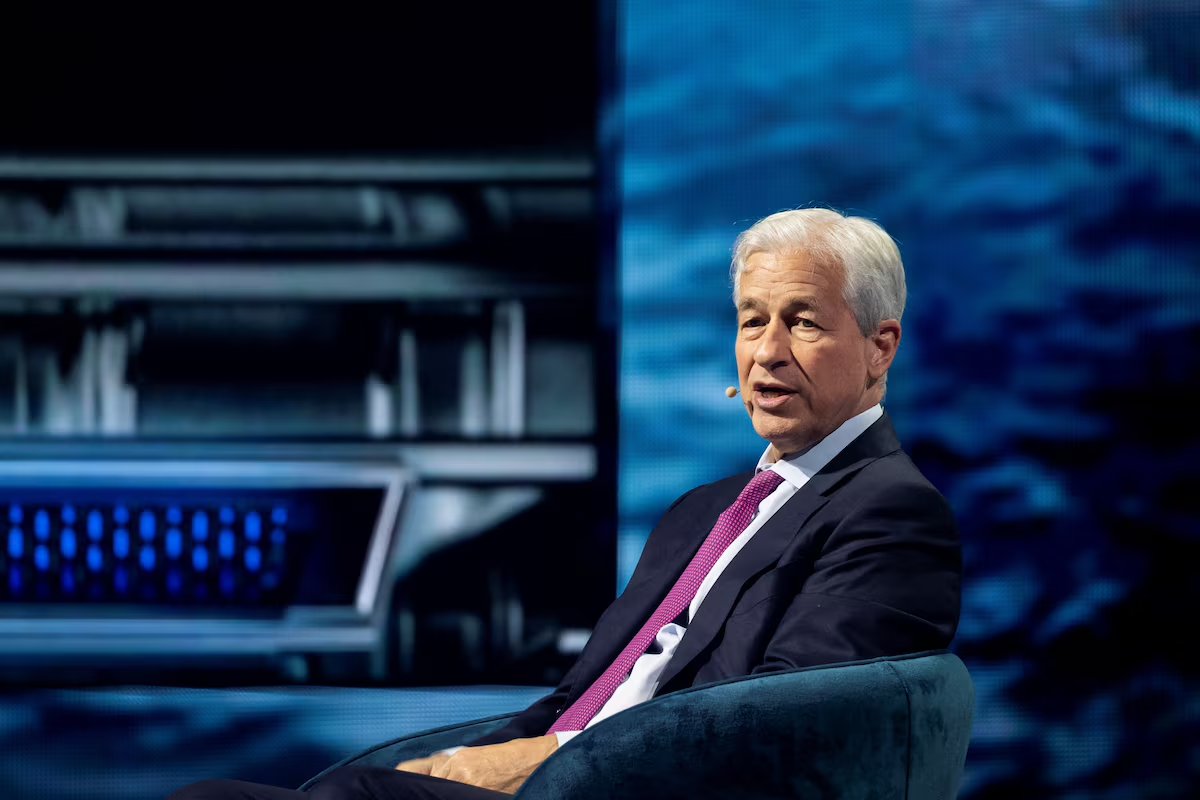
NEW YORK – JPMorgan Chase CEO Jamie Dimon issued a stark warning to shareholders on Monday, April 6, 2026, cautioning that the escalating war with Iran threatens to upend global energy markets and force interest rates higher than currently anticipated.
In his widely read annual letter, the 70-year-old banking veteran described inflation as the potential “skunk at the party” for an otherwise resilient U.S. economy. Dimon emphasized that while the domestic market remains healthy, the “unsettling landscape” of the Middle East could trigger significant oil and commodity price shocks that ripple through every sector of the global economy.
Key Concerns: Energy and Supply Chains
Dimon’s primary concern centers on the volatility of global supply chains and the critical energy chokepoints currently under fire.
Energy Shocks: With the Strait of Hormuz effectively restricted due to the conflict, global oil flows have been halved, leading to fears of a 1970s-style energy crisis.
Persistent Inflation: Dimon noted that “stickier” inflation could emerge as manufacturing and transportation costs soar, potentially pushing the Federal Reserve to keep interest rates elevated for longer.
The Nuclear Threat: Beyond immediate economic data, Dimon highlighted nuclear proliferation as the “gravest threat to the future of mankind,” urging an urgent international response if Iran moves closer to ballistic missile capabilities.
“The outcome of current geopolitical events may very well be the defining factor in how the future global economic order unfolds—then again, it may not.” — Jamie Dimon, Annual Shareholder Letter
The Fed’s Dilemma
Market analysts have been hoping for a pivot toward lower interest rates in 2026, but Dimon’s assessment suggests that central banks may be cornered. If the war drives crude oil prices significantly higher, the Federal Reserve may have no choice but to raise rates further to curb rising consumer prices, even at the risk of a recession.
Economic Outlook for 2026
Despite the warnings, Dimon maintained a sliver of optimism, noting that U.S. consumers are still earning and spending. However, he warned that the “complex global supply chains” are already seeing disruptions in shipbuilding, farming, and food production.
As of early April 2026, the conflict has seen joint U.S.-Israeli strikes on Iranian infrastructure and retaliatory strikes across the region. Dimon concluded that the financial world must prepare for a wide range of outcomes, as the “geopolitical risks are the foremost risks facing financial markets today.”