Source NDTV world
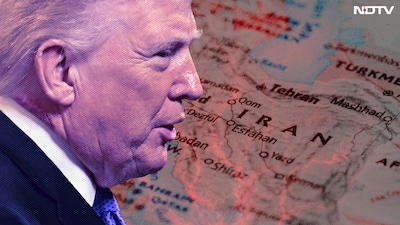
WASHINGTON — In a dramatic escalation of the ongoing conflict in the Middle East, President Donald Trump announced Sunday that the United States Navy has been ordered to implement a full maritime blockade of the Strait of Hormuz. The directive effectively closes one of the world’s most vital energy arteries to all traffic entering or exiting the Persian Gulf.
The President’s order, issued via social media, comes on the heels of the collapse of high-stakes peace negotiations in Islamabad, Pakistan. Vice President JD Vance and a U.S. delegation reportedly left the summit after failing to reach a deal with Iranian representatives regarding Tehran’s nuclear program and its continued attempts to exercise control over the waterway.
“Effective Immediately”
“Effective immediately, the United States Navy, the Finest in the World, will begin the process of BLOCKADING any and all Ships trying to enter, or leave, the Strait of Hormuz,” the President stated. He further warned that any Iranian forces attempting to interfere with U.S. operations or target peaceful vessels would be “blown to hell.”
The blockade aims to strip Tehran of the “tolls” it has reportedly been extorting from merchant vessels—some reaching upwards of $1 million per transit—during the recent period of instability. President Trump also authorized the Navy to interdict any vessel in international waters found to have paid such fees to the Iranian government.
A Region on the Brink
The Strait of Hormuz is a critical chokepoint through which approximately 20% of the world’s petroleum liquids and a significant portion of liquefied natural gas (LNG) pass daily. The move is expected to send shockwaves through global energy markets, which have already been volatile since military operations began in late February.
The U.S. Central Command (CENTCOM) confirmed that the blockade will be supported by ongoing mine-clearing operations. Over the weekend, the guided-missile destroyers USS Frank E. Petersen and USS Michael Murphy reportedly entered the Gulf to begin neutralizing sea mines laid by the Islamic Revolutionary Guard Corps (IRGC).
Key Developments:
Failed Diplomacy: Peace talks in Pakistan ended without a signature after Iran refused to concede on its nuclear enrichment levels.
Naval Interdiction: U.S. forces are now authorized to stop and search vessels suspected of funding the Iranian regime through transit “tolls.”
Market Impact: Analysts predict a sharp spike in crude oil prices as shipping firms scramble to reroute or anchor vessels in the Gulf of Oman.
While the President suggested that “other countries” might join the blockade effort, no international partners have officially confirmed their participation. Tehran has responded by calling the blockade a “violation of international law” and a “declaration of total war,” heightening fears of a direct naval confrontation in the narrow corridor.
For now, the world watches the horizon of the Persian Gulf, where the “maximum pressure” campaign has transitioned from economic sanctions to a literal wall of steel.