Source money control
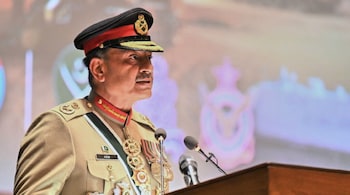
In a development that highlights divisions within Washington’s strategic circles, US intelligence agencies have reportedly raised concerns over Pakistan Army Chief Asim Munir and his alleged connections with Iran’s military establishment, even as he plays a key role in mediating between Donald Trump and Tehran.
According to reports, some American intelligence officials view Munir as a potential “red flag” due to his reported long-standing ties with figures linked to Iran’s military networks. These concerns come at a time when Pakistan is acting as a backchannel facilitator in ongoing US-Iran diplomatic efforts.
Munir, who has been publicly praised by Trump—once described as his “favourite field marshal”—has emerged as a central figure in attempts to ease tensions between Washington and Tehran. His influence has grown significantly as Pakistan positions itself as a mediator in the volatile Middle East crisis.
However, critics within US policy and intelligence circles argue that his dual engagement with both sides could pose strategic risks. Analysts have pointed to his reported interactions with senior Iranian military leaders, suggesting that such ties may complicate trust and transparency in sensitive negotiations.
The debate underscores a broader dilemma for the Trump camp: whether Munir’s access to both Washington and Tehran makes him a valuable diplomatic bridge—or a potential liability. Some experts have also cited Pakistan’s historical role in regional conflicts as a reason for caution in relying too heavily on its military leadership.
Despite these concerns, Pakistan continues to play a pivotal role in facilitating dialogue, with further rounds of US-Iran talks expected. Munir’s involvement reflects Islamabad’s growing geopolitical importance, even as questions persist over the implications of his reported international connections.
As tensions in the Middle East remain high, the evolving role of Pakistan’s military leadership—and the trust it commands—will likely remain under close scrutiny in Washington.