Source India Today
DUBAI / BEIJING — Beijing has officially confirmed that a Chinese-owned oil tanker was targeted in the Strait of Hormuz, marking the first time a Chinese vessel has been caught in the crossfire since the outbreak of the 2026 U.S.-Iran conflict.
The vessel, identified by maritime security sources as the Marshall Islands-flagged JV Innovation, was reportedly carrying markings that read “CHINA OWNER & CREW”—a tactic increasingly used by merchant ships to signal neutrality and deter aggression in the volatile waterway.
Details of the Incident
The attack occurred on Monday near Mina Saqr, off the coast of the United Arab Emirates. While specific details of the weaponry used remain unconfirmed, the crew issued distress alerts reporting a fire on the deck.
At a press briefing on Friday, Chinese Foreign Ministry spokesperson Lin Jian confirmed the incident, stating:
“There are Chinese nationals aboard the vessel, but no crew casualties have been reported so far. We express deep concern for the safety of all vessels and personnel affected by the ongoing conflict.”
Strategic Implications
The strike is particularly significant as China has maintained a delicate balancing act during the war, continuing to be a primary buyer of Iranian oil despite a U.S.-led naval blockade in the Gulf of Oman. The incident took place just 48 hours before a high-level meeting in Beijing between Chinese Foreign Minister Wang Yi and his Iranian counterpart Abbas Araqchi, where the reopening of the Strait was a key agenda item.
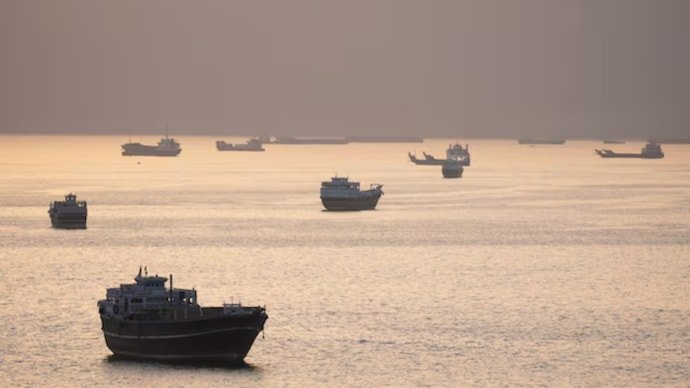
The Strait of Hormuz, a chokepoint responsible for nearly 20% of global oil and gas supplies, has been effectively paralyzed since the conflict escalated in February. Recent weeks have seen:
Stranded Vessels: Approximately 500 ships and 20,000 seafarers remain trapped within the Persian Gulf.
Failed Protection Plans: A U.S.-led initiative to escort “stranded” vessels, dubbed “Project Freedom,” was abruptly paused this week after Iran retaliated with drone strikes against UAE-based assets.
Broken Ceasefire: Despite a brief, Pakistan-mediated ceasefire in April, both Washington and Tehran exchanged fresh missile fire on Thursday.
Market Reaction
Global energy markets reacted sharply to the news, with Brent Crude futures rising by 3.2% on fears that “neutral” status no longer guarantees safe passage through the world’s most critical maritime artery.
While Beijing has not officially blamed either party for the strike, the incident places immense pressure on Chinese leadership to take a more active role in de-escalating the conflict to protect its energy security and the lives of its citizens at sea.