
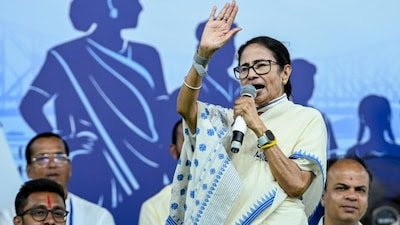
Source News 18
Kolkata — Amid persistent speculation about dissent within the ruling party in West Bengal, the real political challenge for Chief Minister Mamata Banerjee may not lie with a large group of alleged rebel MLAs, but rather with a smaller, more निर्णायक cluster of legislators whose actions could significantly alter the state’s political trajectory.
Recent developments suggest that while talk of nearly 60 disgruntled MLAs has dominated headlines, it is a group of around 17 lawmakers whose strategic importance far outweighs their numbers. These legislators are believed to hold influence in key constituencies and maintain the ability to swing political momentum in tightly contested regions.
Political analysts argue that such a compact yet influential group can exert disproportionate pressure on party leadership. Their concerns reportedly range from local governance issues and ticket distribution to internal party dynamics and leadership accessibility. If not addressed effectively, these grievances could evolve into a broader challenge ahead of upcoming electoral battles.
The ruling party has, however, downplayed the extent of internal discord. Senior leaders insist that differences are part of any large political organization and that mechanisms are in place to resolve disputes. They maintain that the party remains united under Banerjee’s leadership and focused on governance and development.
Opposition parties, on the other hand, have seized upon the situation, claiming that the reported dissatisfaction reflects deeper structural issues within the ruling establishment. They argue that even a small group of strategically positioned MLAs can destabilize internal cohesion if their concerns continue to be overlooked.
Observers note that the coming months will be crucial. Whether the leadership can engage effectively with these 17 MLAs and address their concerns may determine not only internal stability but also the party’s electoral prospects.
As West Bengal’s political landscape continues to evolve, it is increasingly clear that influence in politics is not merely about numbers, but about positioning, timing, and the ability to shape narratives from within.









