
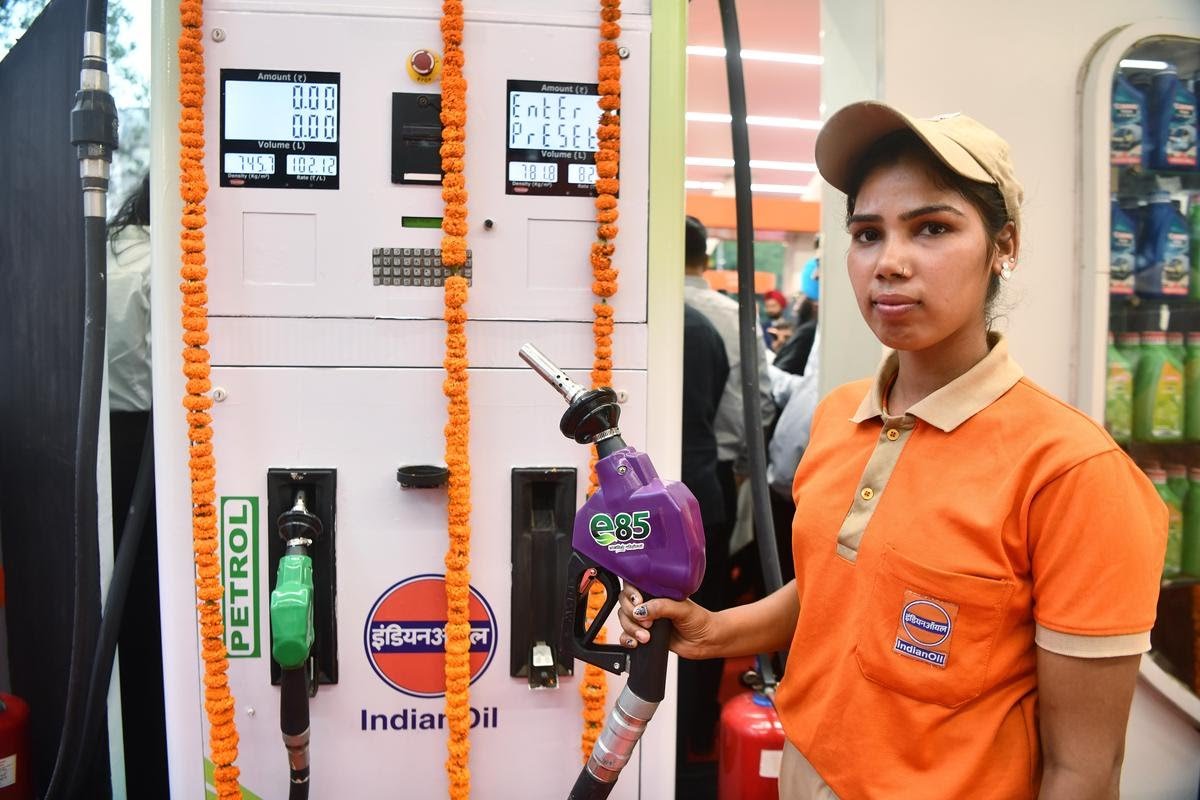
Source The Hindu
NEW DELHI — In a major regulatory and fiscal move to accelerate India’s transition toward eco-friendly transport, the Central Government has officially exempted higher ethanol-blended petrol variants from central excise duty.
The Ministry of Finance, via a notification issued by the Central Board of Indirect Taxes and Customs (CBIC), announced a “nil” excise duty rate for petrol blended with 22%, 25%, 27%, and 30% ethanol (corresponding to the newly standardized E22, E25, E27, and E30 fuel grades).
Eliminating Double Taxation
Government officials clarified that this exemption is primarily a structural correction aimed at preventing double taxation. Ethanol blending is technically classified as a manufacturing activity under Central Excise law. Because base petrol already bears heavy central excise duties and the added ethanol attracts Goods and Services Tax (GST), blending them could inadvertently trigger a secondary layer of excise duty on the entire finished volume.
The new waiver mirrors the existing tax safeguards given to lower-concentration fuels like E5, E10, and E20, ensuring green fuels remain economically viable for energy suppliers.
Stepping Beyond the E20 Milestone
This policy comes closely on the heels of the Bureau of Indian Standards (BIS) establishing standard chemical benchmarks for these high-concentration variants. While India has successfully met its nationwide goal of maintaining a 20% average ethanol blend (E20) at retail pumps ahead of schedule, the groundwork is now set for the next commercial rollout.
The proactive waiver signals a strategic intent by the government to build a robust framework for higher alternative fuel adoption, aiming to resolve several critical national priorities:
Lowering Import Bills: As the world’s third-largest crude consumer, increasing local agricultural-based ethanol content directly cushions India against global oil shocks.
Supporting Agrarian Economies: Higher demand for ethanol heavily benefits the domestic sugarcane and grain farming sectors.
Environmental Impact: Progressing from E20 to E30 will heavily lower baseline vehicular greenhouse gas emissions.
Though these E22 to E30 blends are not yet commercially available at local fuel stations, automakers are rapidly keeping pace. Major manufacturers like Maruti Suzuki and Hero MotoCorp have already showcased early prototypes of flex-fuel vehicles capable of handling even higher concentrations.
While the immediate impact on everyday retail petrol prices will be negligible, the tax relief ensures that when these fuels eventually hit the retail market, they will not face punitive pricing due to overlapping tax frameworks.









