Source The watcher
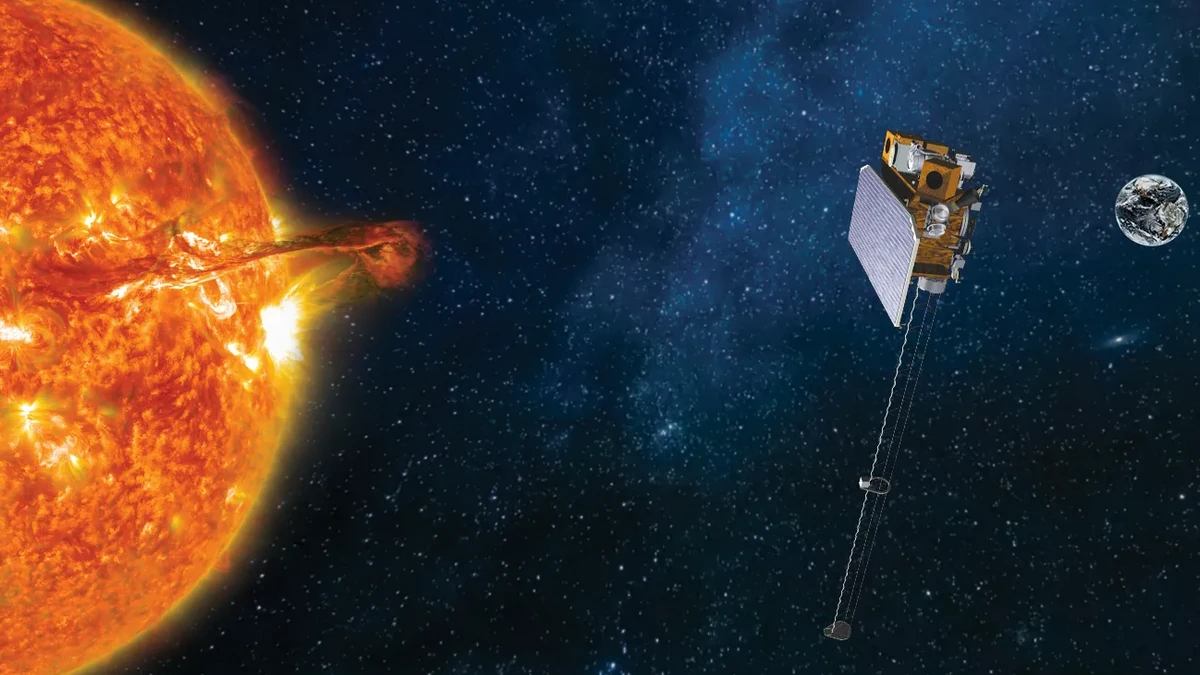
The United States has officially brought its first dedicated space weather satellite, SOLAR-1, into operational service, marking a significant advancement in the nation’s ability to monitor solar activity and safeguard technological systems on Earth.
Developed under the guidance of the National Oceanic and Atmospheric Administration (NOAA), SOLAR-1 is designed to provide continuous, real-time observations of the Sun’s behavior. The satellite will play a crucial role in detecting solar storms, including coronal mass ejections and solar flares, which can disrupt communication networks, satellite operations, power grids, and navigation systems.
Officials say the activation of SOLAR-1 represents a milestone in space weather forecasting. Unlike previous missions that combined multiple scientific objectives, SOLAR-1 is the first U.S. satellite solely dedicated to monitoring solar activity and its effects on Earth’s space environment.
By delivering high-resolution data and faster alerts, the satellite is expected to significantly improve early warning systems. This will allow governments, industries, and space agencies to take preventive measures against potential disruptions caused by geomagnetic storms.
The mission comes at a time when reliance on satellite-based technology and digital infrastructure is at an all-time high. Experts have long warned that severe solar storms could have widespread economic and security impacts, making accurate forecasting more critical than ever.
NOAA officials emphasized that SOLAR-1 will work in coordination with existing space weather monitoring systems, enhancing global capabilities and contributing to international data-sharing efforts.
As solar activity is projected to increase in the coming years due to the Sun’s natural cycle, the deployment of SOLAR-1 positions the United States at the forefront of space weather preparedness, ensuring better protection for both terrestrial and space-based assets.