Source tribune India
CHANDIGARH — In a dramatic policy shift, the Aam Aadmi Party (AAP) government in Punjab has officially notified the implementation of the Centre’s new rural employment framework, the Viksit Bharat-Guarantee for Rozgar and Ajeevika Mission (Gramin)—or VB-G RAM G. The scheme is set to take effect across all notified rural regions in the state starting July 1, 2026.
The move marks a stark U-turn for Chief Minister Bhagwant Mann’s administration. Barely six months prior, on December 30, 2025, the Punjab Vidhan Sabha had convened a special session to pass a unanimous resolution vehemently rejecting the VB-G RAM G Act, which replaces the long-standing Mahatma Gandhi National Rural Employment Guarantee Act (MGNREGA). At the time, CM Mann had labeled the central legislation “anti-poor, anti-Dalit, and anti-farmer,” vowing that Punjab would not adopt it.
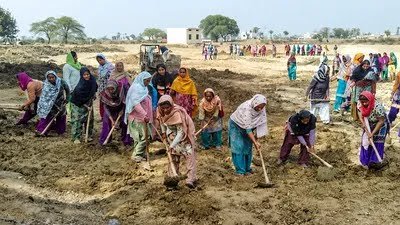
According to the gazette notification issued by the Department of Rural Development and Panchayats, the state government chose to notify the VB-G RAM G Scheme, Punjab 2026, to “align the rural development framework with the national vision of Viksit Bharat 2047.” The updated framework guarantees 125 days of unskilled manual wage employment per rural household each financial year, an increase from the 100-day entitlement previously offered under MGNREGA.
Opposition Demands Answers over “Secret Deal”
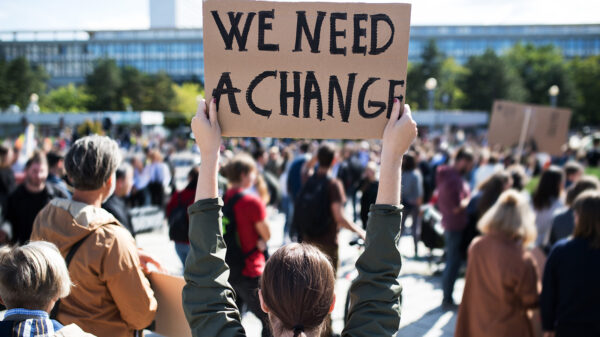
The unexpected gazette notification has triggered intense political backlash from the state’s opposition parties. Critics are questioning how a policy unanimously discarded by the state legislature could be quietly enacted half a year later.
Punjab Congress President Amarinder Singh Raja Warring launched a sharp attack on the ruling government, demanding transparency over the sudden shift.
“What is the deal with the BJP?” Warring questioned in a public statement. “Punjab Vidhan Sabha unanimously rejected the VB-G RAM G scheme in a Special Session. Yet the same AAP government has now notified and implemented it. What changed? If the Assembly’s own resolution can be overturned overnight, Punjabis deserve an explanation.”
Warring further suggested that the timing of the notification might be linked to ongoing political controversies surrounding the Chief Minister, alleging that the administration could be attempting to “buy peace” with the BJP-led central government.
Financial and Administrative Overhaul
While opposition leaders allege political opportunism, political analysts note that practical financial pressures likely forced the state’s hand. Completely opting out of the central framework risked cutting Punjab off from vital rural development funds altogether.
The transition to the VB-G RAM G scheme alters how rural employment is administered in the state:
Entitlement Boost: The guaranteed days of work rise from 100 to 125 days per financial year.
Funding Model Shift: Unlike MGNREGA, which featured heavy central financial packing for wages, the new framework shifts to a 60:40 Centre-state funding sharing ratio for generic states, imposing a tighter financial burden on state treasuries.
Technological Integration: Existing e-KYC-verified MGNREGA job cards will serve as a temporary transition mechanism until new “Gramin Rozgar Guarantee Cards” are officially issued to workers.
While the state government has yet to issue an official counter-response to the opposition’s allegations, the published gazette seals the decision. Come July 1, Punjab will officially transition away from the MGNREGA era and fully adopt the Centre’s revamped rural infrastructure stack.