Source NDTV
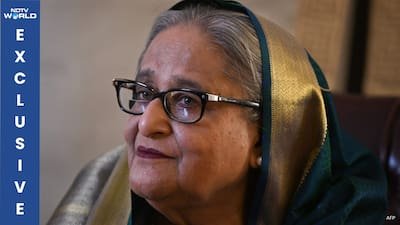
NEW DELHI — Breaking nearly two years of public silence, former Bangladeshi Prime Minister Sheikh Hasina has declared her intention to return to her homeland before the end of the year. The 78-year-old leader made the announcement during an exclusive interview with Indian broadcaster NDTV, marking her most significant public statement since fleeing Dhaka in August 2024.
Hasina’s vow to return comes despite a severe legal backdrop at home, where a domestic tribunal sentenced her to death in absentia late last year for alleged crimes against humanity. Dismissing the verdict, she accused the current establishment of using the judiciary to dismantle her political legacy.
“The verdict against me is not justice,” Hasina stated. “It is part of an illegal, unconstitutional, and politically motivated process. The judiciary has been turned into an instrument of political revenge to make the Awami League leaderless.”
A Return Linked to ‘Restoring Democracy’
Hasina, who has been living in safe haven in India since a massive student-led uprising abruptly ended her 15-year rule, insisted that her decision to go back is not fueled by personal ambition. Instead, she framed her return as a mission to safeguard the political rights of Bangladeshi citizens.
“My return is tied to a far larger question: the political rights of the people of Bangladesh, the restoration of democracy, and the rule of law,” she said.
The political landscape Hasina plans to re-enter is vastly altered. Following a period under an interim administration, general elections held in February 2026 saw the Bangladesh Nationalist Party (BNP) win a sweeping two-thirds majority. BNP leader Tarique Rahman was subsequently sworn in as Prime Minister. Under the transitional authorities, Hasina’s party, the Awami League, was officially outlawed and barred from participating in the political process.
Despite the ban and the crackdowns on her party’s infrastructure, Hasina remained resolute about the Awami League’s survival, describing it as a force “rooted in the soil of Bengal.”
“Through an illegal ban, they may have temporarily suppressed political activities,” she argued. “But they have not been able to erase the Awami League from the hearts of the people.”
Concerns Over Minorities and Current Governance
During the interview, the former prime minister took sharp aim at the current state of governance in Bangladesh, alleging that democratic institutions have eroded, the economy has deteriorated, and religious extremism is on the rise.
She expressed deep concern over reports of escalating violence against religious minorities—including Hindus, Buddhists, and Christians—since her ouster. “Those who attack minorities, vandalise temples, or threaten people in the name of religion… are the enemies of the spirit of Bangladesh’s independence,” she asserted.
Dhaka Demands Extradition
When pressed on the immense personal risk of returning while facing a death sentence, Hasina invoked her history of surviving political turmoil, including the 1975 assassination of her father, state founder Sheikh Mujibur Rahman, and most of her immediate family.
“I do not fear death,” she said. “Overcoming every obstacle and every conspiracy, I will return to my country this year.”
The current Bangladeshi government maintains a strict stance on her status. Dhaka has repeatedly demanded her extradition from New Delhi, insisting that if the former leader returns, she must face the full scope of the country’s judicial procedures. While bilateral ties between India and Bangladesh have stabilized under Prime Minister Tarique Rahman, Hasina’s continued presence in India remains a major diplomatic flashpoint in the region.