
Source Reuter
MOSCOW / NEW DELHI — Facing its most severe domestic energy crunch in decades, Russia has launched seaborne imports of gasoline from India, industry sources revealed. The unexpected trade flow marks a dramatic shift for one of the world’s leading oil producers, which is struggling to stabilize its domestic market following a devastating wave of Ukrainian drone strikes on its energy infrastructure.
According to shipping and market sources, India has already dispatched at least 60,000 metric tons of gasoline to Russia across two initial tankers. Moscow is reportedly drawing up plans to import up to 400,000 tons of gasoline monthly from various international sources to plug a rapidly expanding supply gap.
The Drone Effect: Production Plummets
The reliance on foreign gasoline comes as an intense aerial campaign by Kyiv continues to cripple Russia’s oil-processing capacity. At least 16 refineries were struck in May alone, with another six knocked offline in June.
The cumulative damage has forced national oil processing volumes down to a two-decade low, resulting in a 25% drop in domestic gasoline production.
While Russia’s peak summer demand requires roughly 110,000 tons of gasoline per day, operational domestic refineries are currently yielding only about 85,000 tons daily. This leaves a severe daily structural deficit of 25,000 tons—a gap that existing overland imports from neighboring Belarus have been mathematically unable to close.
Fuel Rationing and Panic Buying Sweeps Across Russia
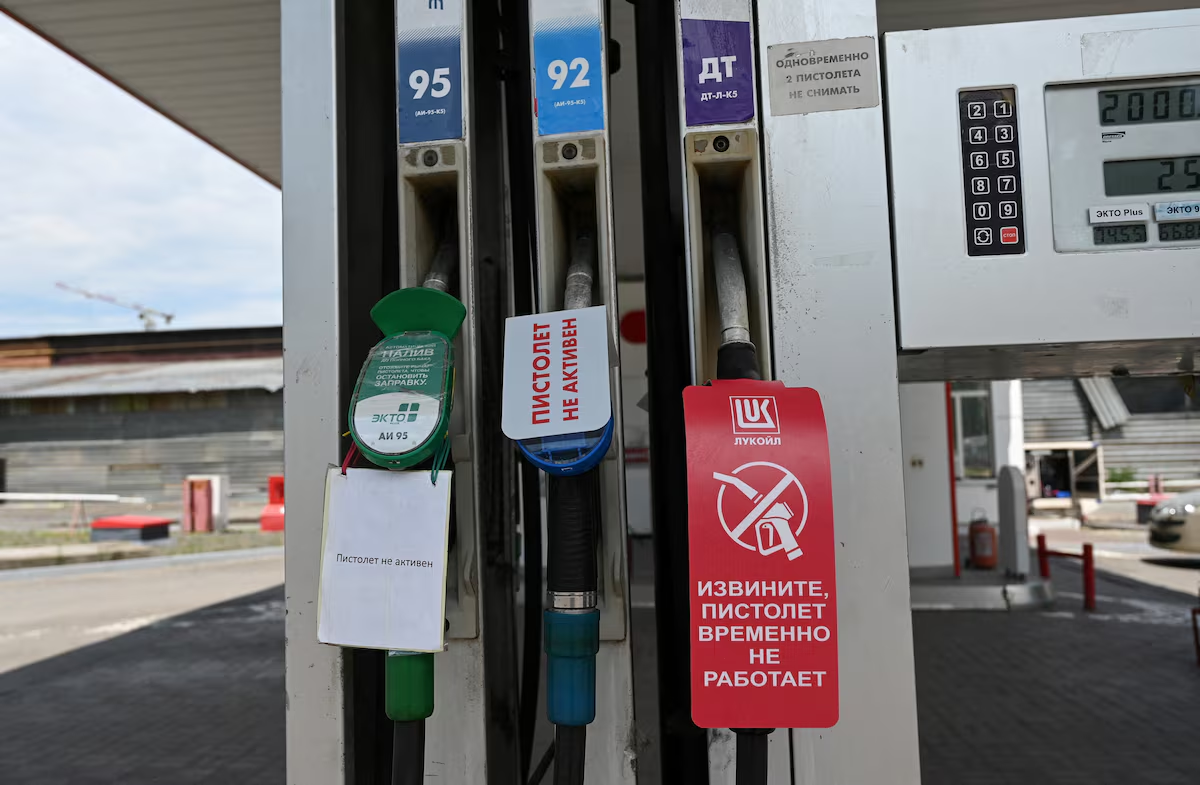
The fuel crisis is now visibly impacting ordinary citizens across Russia’s 11 time zones, transforming what was once a localized disruption into a national economic headache for the Kremlin.
Widespread Sales Caps: More than 50 administrative regions have enacted strict emergency fuel limits. In the Khanty-Mansi Autonomous Okrug—ironically Russia’s most prolific oil-producing region—major gas stations have restricted sales to 40 liters of gasoline and 80 liters of diesel per vehicle.
Queues and Rationing: Long queues have become a fixture at filling stations, with select regions banning the filling of portable containers altogether to curb panic buying and artificial hoarding.
Soaring Prices: Wholesale gasoline prices have surged past 100 rubles per liter, prompting rare public acknowledgments of supply strains from Russian President Vladimir Putin, though he maintained the shortages are “temporary.”
The Crude Irony
The supply chain link between the two nations highlights a massive irony born out of wartime sanctions. Following Western embargoes on Russian energy, India became the primary destination for discounted, seaborne Russian crude oil, importing a record 2.7 million barrels per day in June.
Indian refiners process these massive influxes of cheap Russian barrels into refined petroleum products—including gasoline—and export them worldwide. Because of its disrupted internal capacity, Moscow is now effectively buying back its own original natural resource at standard market rates in the form of finished Indian gasoline.
To offset these exorbitant costs and keep domestic retail prices stable, the Russian State Duma recently rushed through urgent amendments to its national tax code. The new legislation provides hefty government budget subsidies to Russian oil firms purchasing foreign fuel, with the payouts specifically pegged to Indian market benchmark prices and delivery costs from Indian ports.
Neither Russia’s Energy Ministry nor India’s Ministry of Petroleum have officially commented on the ongoing shipments, and it remains unclear which specific Indian refiners are supplying the cargoes.









