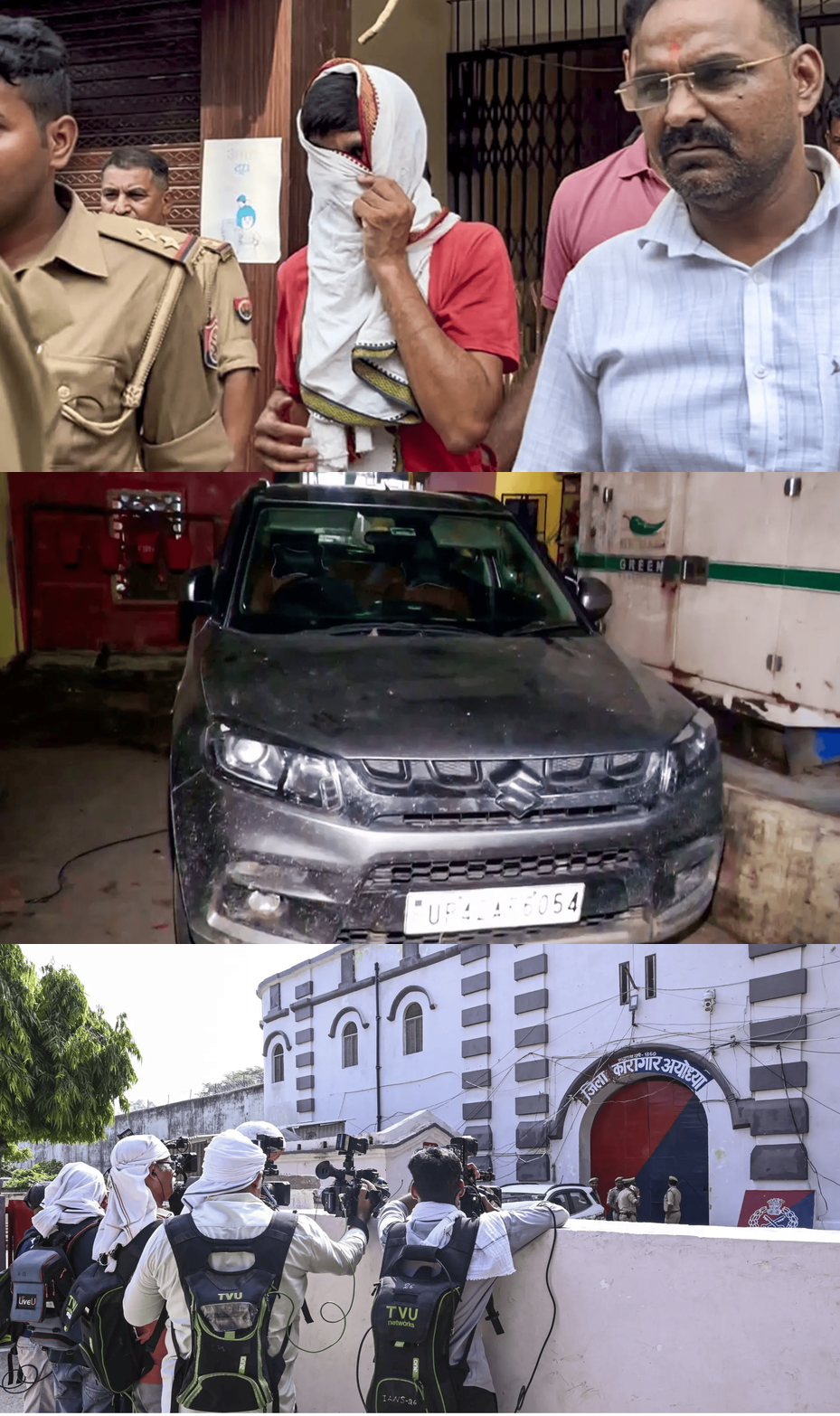
Source TOI
AYODHYA — The ongoing Special Investigation Team (SIT) probe into the multi-lakh embezzlement of donations at the Ayodhya Ram Temple has pulled back the curtain on a staggering reality. Low-wage contract workers, drivers, and private security staff tasked with managing devotees’ offerings allegedly amassed sweeping real estate portfolios, luxury vehicles, and hosted extravagant religious events—all on monthly salaries that barely cleared ₹15,000.
The police have so far arrested eight individuals, including a retired bank employee and a trust official’s personal driver. While investigators have recovered ₹79.85 lakh in hard cash, gold jewelry, and thousands of US dollars, it is the sudden, explosive growth of the suspects’ immovable assets that has stunned authorities.
The ₹15,000 Clerk with a Farmhouse
Among those whose sudden wealth is under the intense glare of the SIT is 22-year-old accused Anukalp Mishra. Nominally employed as a low-level worker drawing a modest salary of roughly ₹15,000 a month, Mishra’s financial profile underwent a complete metamorphosis over the last two years.
According to police sources, investigators have recovered property deeds linking Mishra to high-value acquisitions, including:
A Prime Property: A newly purchased residential house in Ayodhya estimated to be worth approximately ₹65 lakh.
Rural Real Estate: A freshly constructed, sprawling farmhouse on the outskirts of his native Basawa village.
Vehicles & High Living: A premium motorcycle valued at well over ₹1 lakh and active bookings for a top-tier Mahindra Scorpio SUV, initiated just weeks before his arrest.
Local neighbors told police that the family’s financial standing shot up dramatically out of nowhere. In April 2026, Mishra reportedly hosted a lavish, seven-day religious function in his village, inviting high-profile local dignitaries—an event whose budget far outstripped his lifetime legitimate earnings.
Key Players and Modus Operandi
The multi-layered operation allegedly ran like clockwork right under the noses of heavy temple security. The structural mastermind behind the network is suspected to be Ramashankar Yadav, alias “Tinnu Yadav.” Yadav originally entered the temple ecosystem as the personal driver for Trust General Secretary Champat Rai, but managed to leverage his proximity to gain unauthorized access to the keys of the donation-counting room and secure corporate placements for associates.
According to SIT sources, the scale of theft was vast. Bank officials from the State Bank of India (SBI)—which oversees cash management alongside a private housekeeping and staffing agency—revealed that before the scam was blown wide open, daily recorded temple donations hovered around ₹16 lakh to ₹18 lakh. Immediately following the first FIRs and a lockdown on the counting room, recorded daily collections jumped to between ₹24 lakh and ₹26 lakh.
Investigators estimate that the accused were systematically siphoning off between ₹6 lakh and ₹8 lakh every single day from the holy offerings.