Source Live law
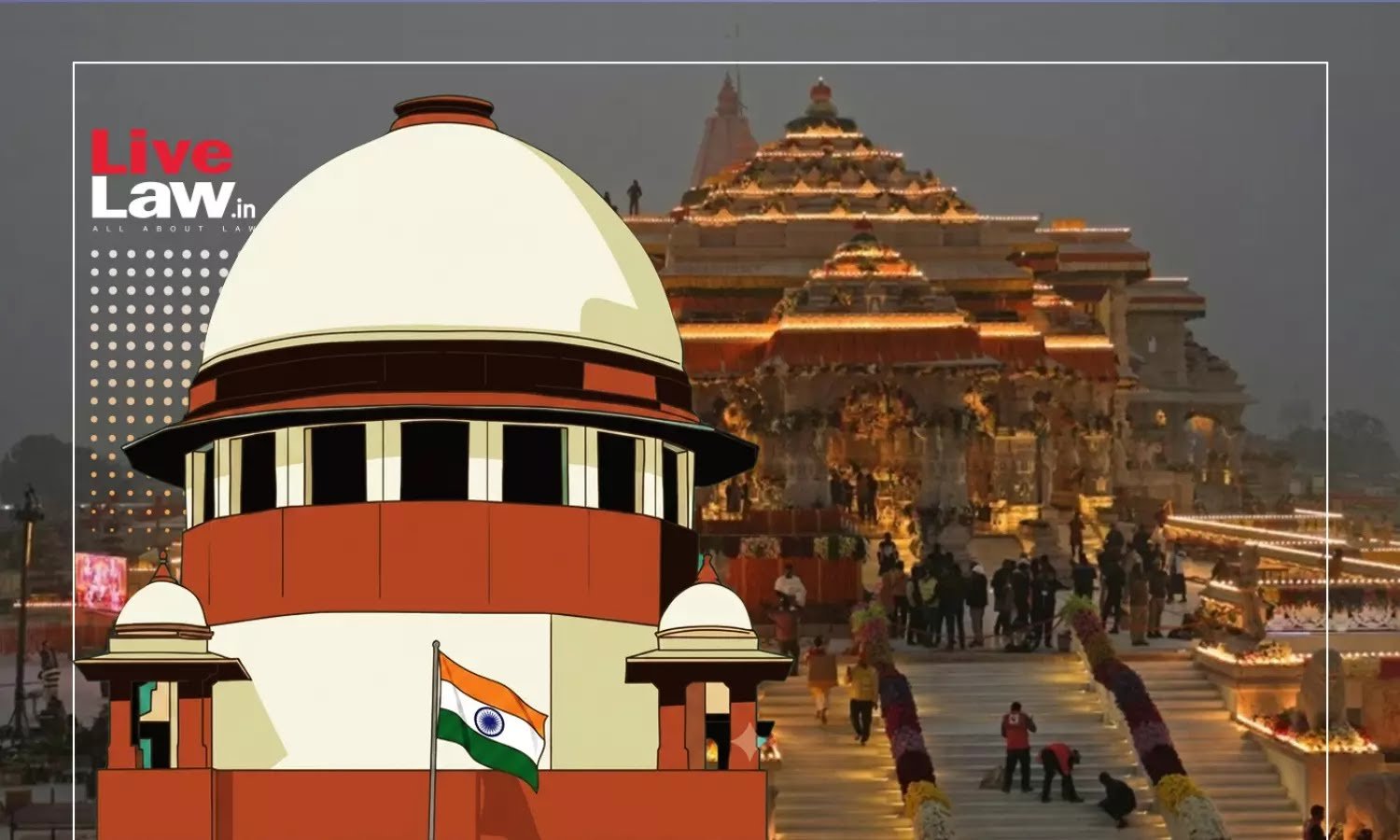
The Supreme Court of India is scheduled to hear a set of petitions on July 13 seeking a court-monitored probe into alleged irregularities involving donations made to the Ram Mandir Ayodhya. The pleas call for an investigation by the Central Bureau of Investigation (CBI), citing concerns over transparency and accountability in the handling of funds.
According to the petitioners, substantial donations collected for the temple’s construction and related activities may have been mismanaged or diverted. The plea argues that given the scale of public contributions and the religious significance of the temple, the matter requires an independent and credible investigation under the supervision of the apex court.
The issue has attracted widespread attention, with petitioners emphasizing that millions of devotees across the country and abroad contributed financially to the temple project. They contend that any suspicion of wrongdoing could undermine public trust and faith. As a result, they have urged the court to ensure a fair and transparent inquiry.
On the other hand, representatives associated with the temple trust have strongly denied any allegations of misconduct. They maintain that all financial transactions have been conducted in accordance with legal norms and audited processes. Sources close to the trust suggest that proper documentation and records are available to counter the claims raised in the petitions.
Legal experts note that the Supreme Court’s decision on whether to order a CBI probe will depend on the evidence presented and the necessity of an independent investigation. The court may also consider alternative mechanisms, such as a special investigation team (SIT), if deemed appropriate.
The upcoming hearing is expected to set the course for further legal proceedings in the matter. If the court decides to intervene, it could have significant implications for governance and financial oversight of large-scale religious and public projects in India.
As the July 13 hearing approaches, all eyes remain on the Supreme Court, whose ruling will be crucial in determining the next steps in addressing the allegations surrounding one of the country’s most prominent religious landmarks.