
Source The Hindu
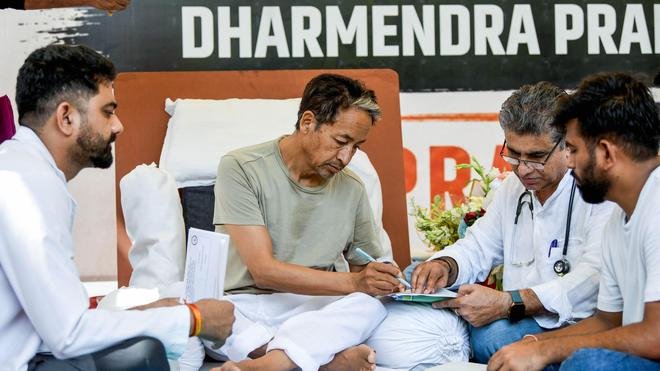
In a sharp escalation of criticism against the government, environmentalist and innovator Sonam Wangchuk continued his indefinite hunger strike for the 18th consecutive day, drawing national attention and concern over his deteriorating health. Supporters and fellow activists have intensified their protests, urging the Centre to respond to his demands related to environmental protection and constitutional safeguards for Ladakh.
Activist Dipke, a close associate of Wangchuk, accused the government of being “cruel and indifferent” for failing to engage in meaningful dialogue. “Ignoring a peaceful protest of this scale reflects poorly on a लोकतांत्रिक system. The government must act before it is too late,” Dipke said while addressing media persons at the protest site.
Wangchuk, known for his work in sustainable development and education reform in Ladakh, began the hunger strike to demand full statehood for the Union Territory and its inclusion under the Sixth Schedule of the Constitution. These demands aim to ensure environmental protection and preserve the unique cultural identity of the region.
Medical teams monitoring Wangchuk have expressed concern about his health, stating that prolonged fasting could lead to serious complications. Despite this, the activist has remained firm, stating that his protest is a “fight for the future of Ladakh and its fragile ecosystem.”
The protest has garnered widespread support from citizens, student groups, and environmental organizations across India. Demonstrations have been reported in several cities, with people calling on the government to initiate talks and address the concerns raised.
Meanwhile, government officials have maintained a cautious stance, indicating that discussions on Ladakh’s governance and development are ongoing but refraining from commenting directly on the hunger strike.
As the fast enters its third week, pressure continues to mount on the Centre to break its silence and engage with Wangchuk before the situation escalates further.









