Source TOI
NEW DELHI — Behind every medal draped around an athlete’s neck lies years of grueling preparation, high-performance training, and critical financial backing. At the 2026 Commonwealth Games in Glasgow, India’s medal-winning contingent was powered by direct government support totaling ₹15.56 crore delivered through the Target Olympic Podium Scheme (TOPS) and the Annual Calendar for Training and Competition (ACTC).
Key Highlights of India’s Campaign
Final Tally: India concluded its CWG 2026 campaign in fourth place overall (behind Australia, England, and Canada) with 39 medals: 13 Gold, 17 Silver, and 9 Bronze.
Top Sports: Boxing and athletics spearheaded the medal charge with 10 medals each, followed by weightlifting (8 medals) and para-athletics (6 medals).
Navigating a Scaled-Back Roster: The 2026 Games featured a truncated discipline list that omitted traditional Indian strongholds like shooting, wrestling, badminton, table tennis, and field hockey. Despite losing sports that historically yielded heavy hardware, Indian athletes delivered standout individual performances across the board.
Standout Performers & Financial Backing
The ₹15.56 crore pool provided elite athletes with essential access to world-class coaching, international competition exposure, sports science facilities, and foreign training camps.
Notable Breakthroughs
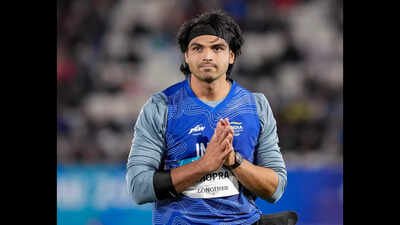
Gulveer Singh (Distance Running): Emerged as India’s standout track-and-field star by winning Silver in the 10,000m and Bronze in the 5,000m. The 28-year-old Naib Subedar became the first Indian track-and-field athlete in history to win two individual medals at a single CWG edition. Regularly training at the high-performance center in Colorado Springs, USA, Singh’s historic feat was backed by ₹30.40 lakh under TOPS and ₹25.32 lakh under ACTC.
Mirabai Chanu (Weightlifting): The Olympic and CWG veteran received ₹1.66 crore via TOPS along with ₹14.01 lakh under ACTC, reaffirming the high-value investment in proven world-class contenders.
A Long-Term Vision for Indian Sports
The strategy marks a fundamental shift in sports governance—moving away from post-victory monetary awards toward proactive, structured investment in training infrastructure before major multi-sport events.
With periodic reviews, audit mechanisms, and stakeholder consultations, the Sports Authority of India (SAI) and the Ministry of Youth Affairs and Sports aim to ensure that no promising talent lacks international-grade resources due to financial constraints. As India sets its sights on future international milestones—including the 2030 Asian Games and a proposed bid for the 2036 Olympic Games in Ahmedabad—this ₹15.56 crore investment underscores the financial blueprint required to build a sustainable sporting powerhouse.