
Source Aljajeera
Global attention has once again turned to the strategically vital Strait of Hormuz, as reports indicate a noticeable drop in maritime transit through the narrow passage. Amid rising concerns over regional stability and energy supply chains, former U.S. President Donald Trump has claimed that the United States maintains “control” over the situation, reigniting debate over Washington’s role in the Gulf.
The Strait of Hormuz, a narrow waterway connecting the Persian Gulf to the Arabian Sea, is one of the world’s most critical chokepoints for oil transportation. Nearly a fifth of global petroleum consumption passes through it daily, making any disruption a matter of international concern. Recent data from shipping trackers and maritime agencies suggest that vessel traffic has declined in recent weeks, though the reasons remain complex and multifaceted.
Analysts attribute the drop in transit to a combination of geopolitical tensions, security concerns, and cautious behavior by shipping companies. Heightened friction between regional powers, particularly involving Iran and Western nations, has created an environment of uncertainty. Some shipping firms are reportedly rerouting or delaying cargo to avoid potential risks, while insurance costs for vessels passing through the area have also increased significantly.
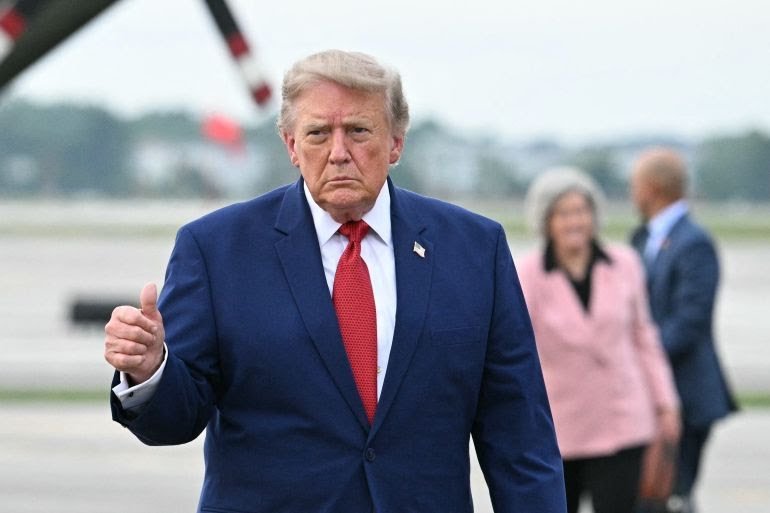
In this context, Trump’s remarks have drawn both support and criticism. Speaking at a public event, he stated that the United States still has “control” over the Strait and emphasized the strength of American naval presence in the region. “We have control. Nobody’s going to shut that down,” he said, referring to the waterway’s continued accessibility for global trade.
Trump’s statement appears to echo his administration’s earlier policy stance, which emphasized a strong military presence in the Gulf and a hardline approach toward Iran. During his presidency, tensions between Washington and Tehran escalated significantly, including incidents involving tanker seizures and drone strikes. His latest comments suggest a continuation of that assertive rhetoric, even as the current U.S. administration pursues a more measured diplomatic approach.
However, experts have cautioned against oversimplifying the situation. While the United States maintains a substantial naval presence through the Fifth Fleet, based in Bahrain, control over the Strait is not absolute. The waterway lies partly within Iranian territorial waters, and international maritime law governs its use. Any claim of unilateral control is therefore politically charged and subject to interpretation.
Regional stakeholders have responded cautiously to the developments. Gulf countries, heavily reliant on oil exports, are closely monitoring the situation and exploring alternative routes, including pipelines that bypass the Strait. Meanwhile, global markets have reacted with mild volatility, as investors weigh the potential impact on oil supply and prices.
Energy analysts note that even a temporary reduction in traffic can have ripple effects across the global economy. “The Strait of Hormuz is a critical artery for energy flows,” said one market expert. “Any disruption, perceived or real, can influence prices, investor sentiment, and geopolitical calculations.”
The current decline in transit does not yet indicate a full-scale crisis, but it underscores the fragility of the region’s security dynamics. Maritime authorities continue to urge caution, and international naval coalitions remain active in ensuring safe passage for commercial vessels.
As tensions persist, Trump’s comments have added a new dimension to the discourse, highlighting the enduring political significance of the Strait of Hormuz. Whether his assertion reflects strategic reality or political positioning remains a subject of debate.
For now, the world watches closely as developments unfold in one of the most sensitive and consequential waterways on the planet—where economics, security, and geopolitics intersect in profound ways.









