Source HT
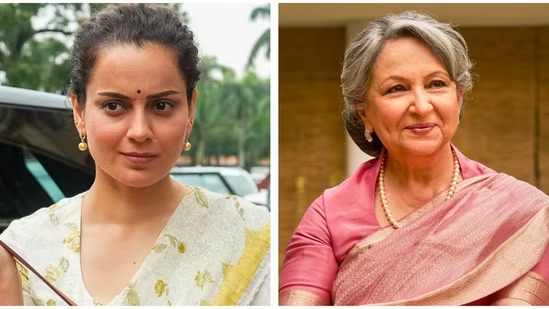
New Delhi: Actor and politician Kangana Ranaut has sparked a fresh controversy after strongly reacting to veteran actress Sharmila Tagore’s recent comments on the national song Vande Mataram. Ranaut termed Tagore’s remarks as “contrived” and urged people to move beyond what she described as a “Hindu-Muslim mindset.”
The debate began after Sharmila Tagore reportedly expressed nuanced views on the cultural and political interpretations of Vande Mataram, a song that has historically held deep emotional and patriotic significance in India. While Tagore’s remarks were seen by some as a call for inclusivity and sensitivity, they drew criticism from others who felt they undermined the song’s legacy.
Reacting sharply, Kangana Ranaut took to social media, stating that such perspectives appear “manufactured” and disconnected from the ground reality. She emphasized that Vande Mataram represents national unity and pride, and should not be viewed through a religious lens. Ranaut further added that India must rise above divisive narratives and embrace a more unified national identity.
“Why reduce everything to communal angles?” Ranaut questioned, asserting that cultural symbols like Vande Mataram transcend religious boundaries. Her remarks quickly gained traction online, igniting widespread discussions across political and social circles.
The controversy has once again brought into focus the ongoing debate over the interpretation of historical and cultural symbols in modern India. While some supported Ranaut’s stance, arguing for a more assertive nationalistic approach, others defended Tagore’s perspective, calling it a reminder of India’s pluralistic ethos.
Political commentators note that such debates often resurface due to the complex history surrounding Vande Mataram. Originally composed during the freedom struggle, the song has been both celebrated and contested over the decades, particularly regarding its interpretation by different communities.
As reactions continue to pour in, the exchange between the two prominent figures highlights the broader ideological divide in contemporary discourse. Whether viewed as a matter of national pride or cultural sensitivity, the discussion around Vande Mataram remains as relevant—and polarizing—as ever.
The incident underscores how public figures continue to shape and influence conversations on identity, nationalism, and cultural heritage in India.