
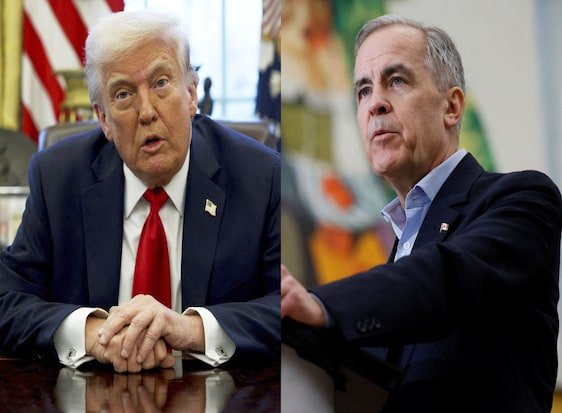
Source NDTV
Canada has suspended ongoing trade negotiations with former U.S. President Donald Trump’s administration, citing what it described as “unfair and aggressive” tariff measures that threaten to strain economic relations between the two countries.
The dispute escalated after the United States announced plans to impose tariffs of up to 50% on selected Canadian exports. The move, justified by Washington as a protective measure for domestic industries, has drawn strong criticism from Canadian officials, who argue that such actions violate the principles of fair trade and longstanding bilateral agreements.
In a statement released by Canada’s Ministry of International Trade, officials emphasized that continuing negotiations under such conditions would be counterproductive. “We cannot engage in meaningful discussions while facing disproportionate and punitive tariffs,” the statement read. The government added that it remains open to dialogue but only if the U.S. reverses or reconsiders the proposed tariff measures.
Economic analysts warn that the suspension of talks could have significant consequences for industries on both sides of the border, particularly in sectors such as steel, aluminum, and agriculture. Canada, one of the United States’ largest trading partners, exports billions of dollars’ worth of goods annually, making the relationship critical to both economies.
Meanwhile, representatives aligned with Trump defended the tariff policy, arguing that it is necessary to protect American jobs and reduce trade imbalances. They maintain that the measures are part of a broader strategy to strengthen domestic manufacturing and ensure fair competition.
The standoff marks a renewed period of tension in U.S.-Canada relations, which have historically been characterized by close economic cooperation. Observers note that unless both sides find common ground soon, the dispute could escalate into a broader trade conflict with ripple effects across North America.
For now, Canada’s decision to suspend negotiations sends a clear message: it will not proceed with trade discussions under conditions it views as inequitable, setting the stage for further diplomatic and economic negotiations in the coming weeks.









