Source Aljajeera
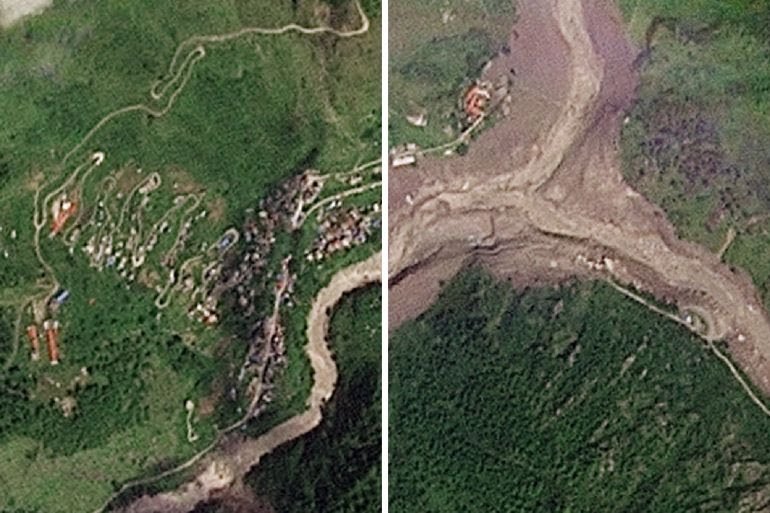
Kathmandu/Lhasa: Newly released satellite imagery has revealed the scale of devastation caused by recent floods along the Nepal-Tibet border, highlighting widespread destruction of infrastructure, homes, and natural landscapes across the Himalayan region.
The floods, triggered by heavy monsoon rains and possible glacial lake outbursts, have severely impacted remote mountainous areas that are difficult to access. According to disaster response authorities, several villages in northern Nepal and parts of Tibet have been inundated, with rivers overflowing and sweeping away roads, bridges, and settlements.
High-resolution satellite images show vast stretches of land covered in mud and debris, with riverbanks drastically altered by the force of the water. In some locations, entire clusters of homes appear to have been washed away, leaving behind only scattered remnants. Key transport routes connecting Nepal and Tibet have also suffered significant damage, raising concerns about relief and rescue operations.
Emergency teams in Nepal have been working around the clock to reach affected communities, though landslides and damaged infrastructure have made rescue efforts extremely challenging. Officials have reported casualties, though the exact number remains unclear due to communication disruptions in remote areas.
In Tibet, local authorities have mobilized resources to assist displaced residents and assess the extent of damage. Temporary shelters have been set up, and efforts are underway to restore essential services, including electricity and water supply.
Experts warn that such disasters may become more frequent due to climate change, which is accelerating glacier melt and increasing the risk of glacial lake outburst floods in the Himalayan region. Environmentalists have called for improved monitoring systems and early warning mechanisms to mitigate future risks.
As authorities continue to assess the damage, international organizations have expressed readiness to provide humanitarian aid. The focus now remains on rescue operations, relief distribution, and rebuilding efforts in the aftermath of one of the region’s most severe flood events in recent years.