Source NDTV World
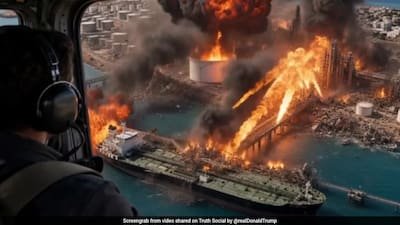
In a dramatic escalation of rhetoric amid ongoing tensions between the United States and Iran, former U.S. President Donald Trump has stirred controversy by sharing artificial intelligence (AI)-generated videos that appear to depict a devastating attack on Iran’s strategic Kharg Island. The posts came shortly after confirmed U.S. military strikes targeted Iranian positions on Larak Island in the Strait of Hormuz, raising concerns about misinformation and the risk of further escalation in the region.
The AI-generated clips, shared on Trump’s social media platform, showed massive explosions engulfing oil storage facilities and tankers. Accompanying the footage was a bold claim that Kharg Island—one of Iran’s most critical oil export hubs—was being “blown to smithereens.” However, there has been no official confirmation from the U.S. military or independent sources that any such strike on Kharg Island actually took place.
The timing of the posts is significant. Just hours earlier, U.S. forces carried out what officials described as “limited and precise” strikes on Iranian rocket launchers stationed on Larak Island. According to American military sources, the operation aimed to neutralize imminent threats posed by Iran’s alleged preparations to deploy sea mines in the strategically vital Strait of Hormuz, a key artery for global oil shipments.
Iran responded swiftly, launching missiles toward U.S. military bases in Jordan, though most were intercepted before causing significant damage. The exchange marked the first direct military confrontation between the two nations in weeks, signaling a renewed phase of hostilities in a conflict that has been simmering for months.
Iranian officials have dismissed Trump’s AI videos as misinformation, insisting that Kharg Island remains operational and unaffected. The island plays a crucial role in Iran’s economy, historically handling a large share of the country’s oil exports. Any confirmed attack on such a facility would represent a major escalation with potentially severe consequences for global energy markets.
The controversy surrounding the AI-generated footage has reignited debates over the use of deepfake technology in geopolitical conflicts. Critics argue that such content can mislead the public, inflame tensions, and complicate diplomatic efforts. Trump’s use of AI visuals in this context has drawn sharp reactions from analysts and policymakers, who warn that the spread of unverified digital content could blur the line between reality and propaganda.
Meanwhile, the broader conflict continues to impact global markets. Oil prices have surged amid fears of supply disruptions, and shipping activity through the Strait of Hormuz has declined significantly due to heightened security risks.
Despite the escalation, Iran’s leadership has signaled a willingness to pursue a negotiated resolution, even as it vows to respond firmly to any aggression. On the other hand, the United States appears to be combining limited military actions with increased economic pressure, including new sanctions targeting Iran’s financial networks.
As tensions remain high, Trump’s AI-driven claims have added a new and unpredictable dimension to an already volatile situation, highlighting the growing influence—and potential danger—of emerging technologies in modern warfare and international politics.