
Source telegraph India
A devastating series of flash floods in Nepal has triggered a sharp political and environmental response, with the country calling for “climate compensation, not aid” from major global powers including India, the United States, and China. The disaster, which has claimed over a thousand lives and left thousands missing, is being increasingly linked to climate change and glacial instability in the Himalayan region.
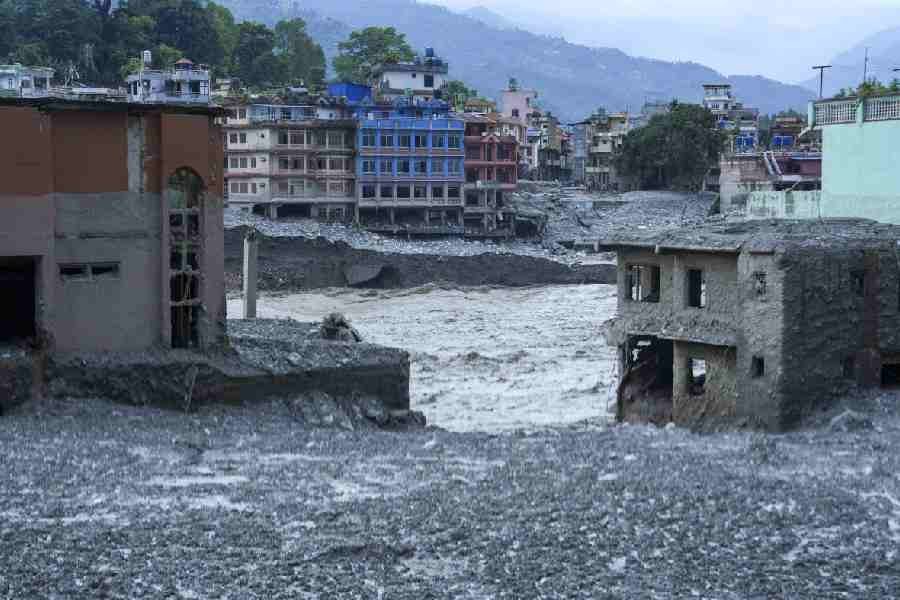
The floods were caused by a massive glacial collapse in the Himalayas, unleashing torrents of water, mud, and debris across northern Nepal and bordering regions. Entire villages were swept away, critical infrastructure destroyed, and thousands displaced. Rescue operations remain ongoing, but hopes of finding survivors are fading as time passes.
Nepalese officials have argued that the country, which contributes minimally to global carbon emissions, is bearing the disproportionate burden of a crisis created largely by industrialized nations. Leaders and policymakers have stressed that traditional humanitarian aid is not sufficient, instead demanding long-term financial compensation to address climate-related loss and damage.
Experts say that rising global temperatures have accelerated the melting of Himalayan glaciers, destabilizing mountain ecosystems and increasing the frequency of such disasters. Intense monsoon rains, combined with weakened glacial structures, created the conditions for the catastrophic flooding.
The economic toll of the disaster is expected to be severe. Initial estimates suggest damages could reach billions of dollars, impacting Nepal’s hydropower sector, infrastructure, and local livelihoods. In some areas, nearly 10% of the country’s electricity generation capacity has been affected, forcing Nepal to import power to meet domestic demand.
Adding to the crisis, concerns have been raised about insufficient regional cooperation and data sharing. Reports indicate that Nepal had sought more detailed hydrological and glacier-risk data from neighboring countries, particularly China, but did not receive adequate information in time to anticipate the disaster.
India and the United States, along with other nations, have offered humanitarian assistance and support for rescue operations. However, Nepal’s stance highlights a growing divide between vulnerable nations and major emitters over how to address the escalating impacts of climate change.
The tragedy has reignited global debate over climate accountability and the need for a robust international mechanism to compensate countries facing irreversible climate damage. For Nepal, this disaster is not just a natural calamity but a stark reminder of global inequality in climate responsibility.
As recovery efforts continue, Nepal’s call for climate justice is expected to resonate strongly in upcoming international climate negotiations, putting pressure on major economies to move beyond aid and toward meaningful compensation frameworks.









