
Source dw
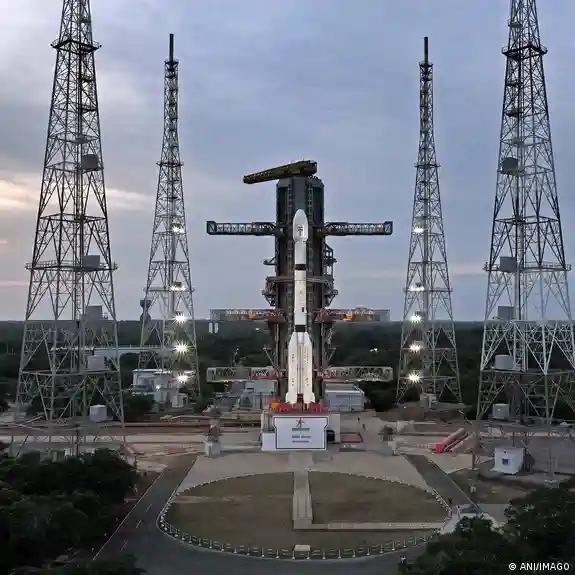
The Indian Space Research Organisation (ISRO) successfully launched EOS-05, India’s first dedicated geo-imaging satellite, into orbit on Friday, September 4, 2026. Dubbed the “eye in the sky,” the advanced Earth observation satellite was carried aboard the Geosynchronous Satellite Launch Vehicle (GSLV-F17). Liftoff occurred at 2:55 a.m. IST from the Second Launch Pad at the Satish Dhawan Space Centre in Sriharikota, following a 27-hour countdown.
Approximately 18 minutes after liftoff, the 2,367 kg payload—the heaviest Earth observation satellite ever placed into orbit by a GSLV rocket—was injected into a precise sub-geosynchronous transfer orbit. The EOS-05 will ultimately operate from an altitude of 36,000 km, allowing it to match the Earth’s rotational speed.
This mission marks ISRO’s first successful launch of 2026 and represents a major technological leap for India’s space program. Uniquely configured with multi-band operating capabilities, EOS-05 is designed to provide high-resolution, real-time imagery of the subcontinent. This uninterrupted monitoring capability will critically enhance India’s strategic operations, agricultural planning, and disaster management responses.
The successful deployment of EOS-05 has been widely celebrated across the nation as a major morale booster for the space agency and a testament to the resilience, dedication, and ingenuity of Indian scientists and space engineers. By successfully utilizing a geosynchronous orbit for advanced imaging applications, ISRO continues to solidify its position as a leading force in global space technology and Earth observation capabilities.









