Source Reuters
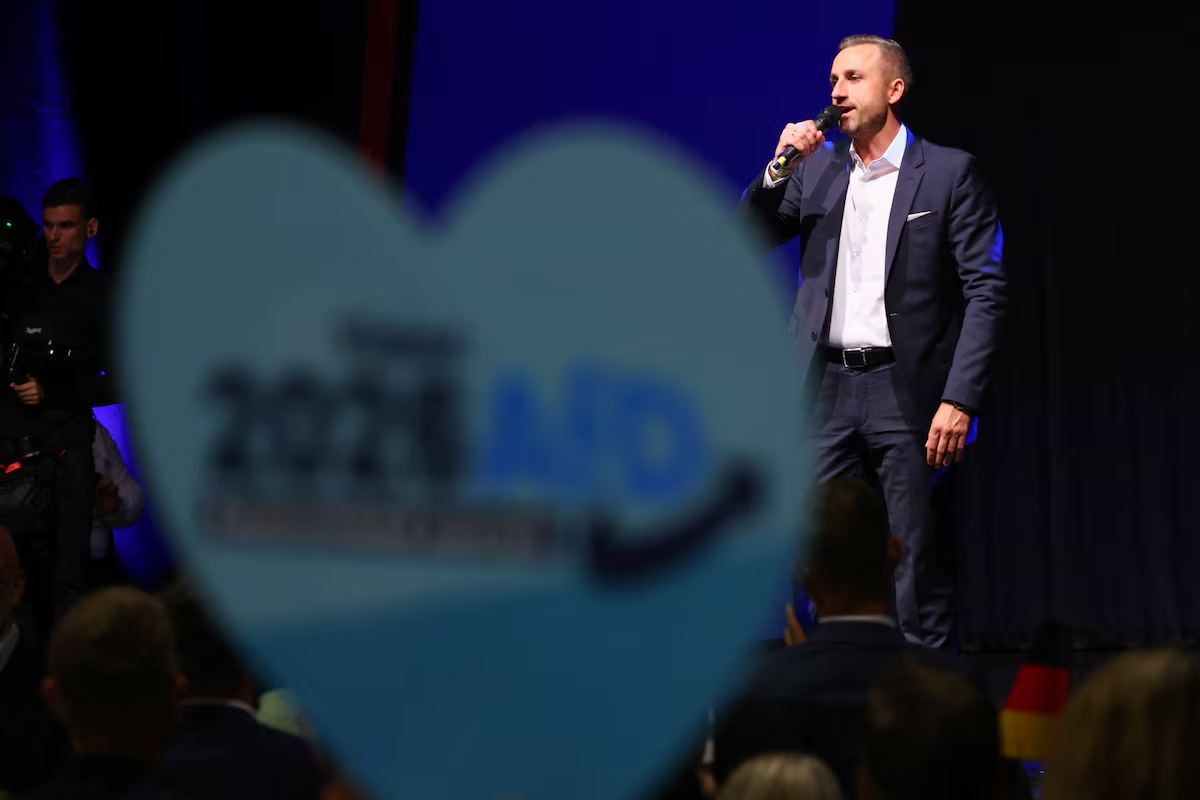
PARIS — The historic victory of the far-right Alternative for Germany (AfD) party in regional state elections has sent political shockwaves well beyond Berlin, prompting deep alarm in neighboring France. French government officials have openly expressed their concerns over the weekend’s election results, which saw the AfD become the first far-right party to win a state election in Germany since the end of World War II.
In the eastern state of Thuringia, the AfD secured a sweeping first-place finish with nearly a third of the vote, while trailing closely behind the conservative Christian Democratic Union (CDU) to take a strong second place in neighboring Saxony. The results reflect a severe blow to German Chancellor Olaf Scholz’s ruling coalition, but the reverberations are being felt most acutely in Paris, where the centrist government is grappling with its own domestic populist challenges.
French Finance Minister Roland Lescure did not mince words when discussing the outcome on Monday. Speaking in a television interview, Lescure characterized the AfD’s electoral triumph as a “very, very worrying signal” for the entire continent. He stressed that the results are symptomatic of a broader international shift that liberal democracies must confront head-on. “This shows that we face a major challenge in the face of a populist wave which is spreading around the world today, and which we must resist,” Lescure noted, urging a coordinated response to counter the rising tide of extremism.
France’s European Affairs Minister Benjamin Haddad echoed this sense of urgency, taking to social media to describe the AfD’s unprecedented success as “a very grave moment for Europe.” Haddad argued that mainstream political leaders can no longer afford to dismiss the grievances that are driving voters toward the political fringes. “We must listen with humility to the anger, fears, and worries and duly respond to these concerns,” he wrote. “But nationalism and xenophobia will never be the answer.”
The intense anxiety across the Rhine is deeply intertwined with France’s own volatile political landscape. Just months prior, French President Emmanuel Macron called a risky snap parliamentary election to counter the surging popularity of Marine Le Pen’s far-right National Rally (RN). While a hastily formed coalition managed to keep the RN from securing an absolute majority, the far-right emerged with unprecedented legislative power in the National Assembly. Seeing a similar nationalist playbook succeed in Germany—the other half of the traditional “Franco-German engine” that drives European Union policy—has compounded fears in Paris of a continent tilting definitively to the right.
Political analysts warn that the concurrent rise of nationalist movements in both countries could severely hamper the European Union’s ability to act decisively. A weakened Scholz administration in Berlin and a deeply fractured parliament in Paris may struggle to find consensus on critical cross-border issues, including defense spending, economic integration, and sustained support for Ukraine.
While mainstream German parties have vowed to maintain a strict “firewall” by refusing to form a governing coalition with the AfD, the party’s sheer electoral weight makes governing in the eastern states increasingly difficult. For France, the message from the German electorate is stark: the populist momentum that European centrists hoped was a temporary aberration has instead established deep, enduring roots at the very heart of Europe.