Source The Indian express
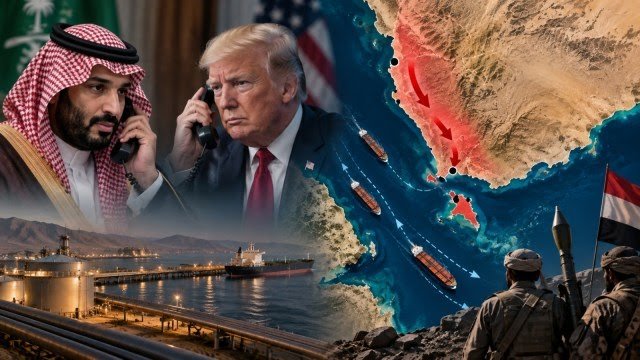
WASHINGTON — Saudi Crown Prince Mohammed bin Salman made two urgent phone calls to U.S. President Donald Trump, pressing the White House to authorize immediate military strikes against Iran-aligned Houthi forces in Yemen. Despite the high-stakes appeal from Riyadh, President Trump rejected the request, opting to keep American firepower off the Yemeni front line for now.
The sudden outreach from the Saudi crown prince followed a swift deterioration of the battlefield along Yemen’s western coastline. Houthi militants launched a rapid offensive, seizing the key port town of Mokha and pushing retreat-bound, Saudi-backed government troops toward the Bab el-Mandeb Strait. The rebels subsequently took control of Perim Island (also known as Mayun) in the chokepoint’s narrow shipping lane, effectively threatening maritime traffic through a passage that handles roughly 12% of global seaborne trade and a sizable share of Saudi crude exports.
Alarmed by the rebel advance, the crown prince phoned Trump first to report on the collapsing front lines, then called back hours later to plead directly for American airstrikes.
Trump declined the request due to strategic priorities:
Avoiding a Multi-Front Escalation: The administration’s primary military directive in the region remains centered on Iran and safeguarding the Strait of Hormuz. Opening an active combat theater in Yemen risks entangling American forces in another protracted regional confrontation.
Regional Burden-Sharing: Administration officials reiterated that Washington’s doctrine prioritizes empowering Gulf partners to manage regional ground conflicts rather than deploying U.S. bombers to fight local wars on their behalf.
Preserving Freedom of Navigation Over Regime Combat: The White House maintains that direct U.S. military mandates are strictly tied to securing international shipping lanes, resisting mission creep into the Yemeni civil conflict.
The appeal marks a sharp reversal for Riyadh. Months earlier, Saudi leaders informed Washington they could manage the Houthi threat autonomously. However, as the rebels intensified cross-border drone barrages and pressed toward vital shipping corridors, Saudi forces found themselves severely strained.
While Trump ruled out kinetic airstrikes, Washington did not leave the kingdom entirely unassisted. The Pentagon dispatched the commander of U.S. Central Command, Admiral Brad Cooper, to Saudi Arabia for emergency consultations. Furthermore, Washington agreed to supply Riyadh with actionable intelligence and targeting data to bolster its own air operations, backed by roughly 200 non-combat U.S. personnel deployed in the kingdom.
For now, Washington draws a firm line: intelligence and logistics will flow to the Saudis, but American jets will not drop the bombs.