
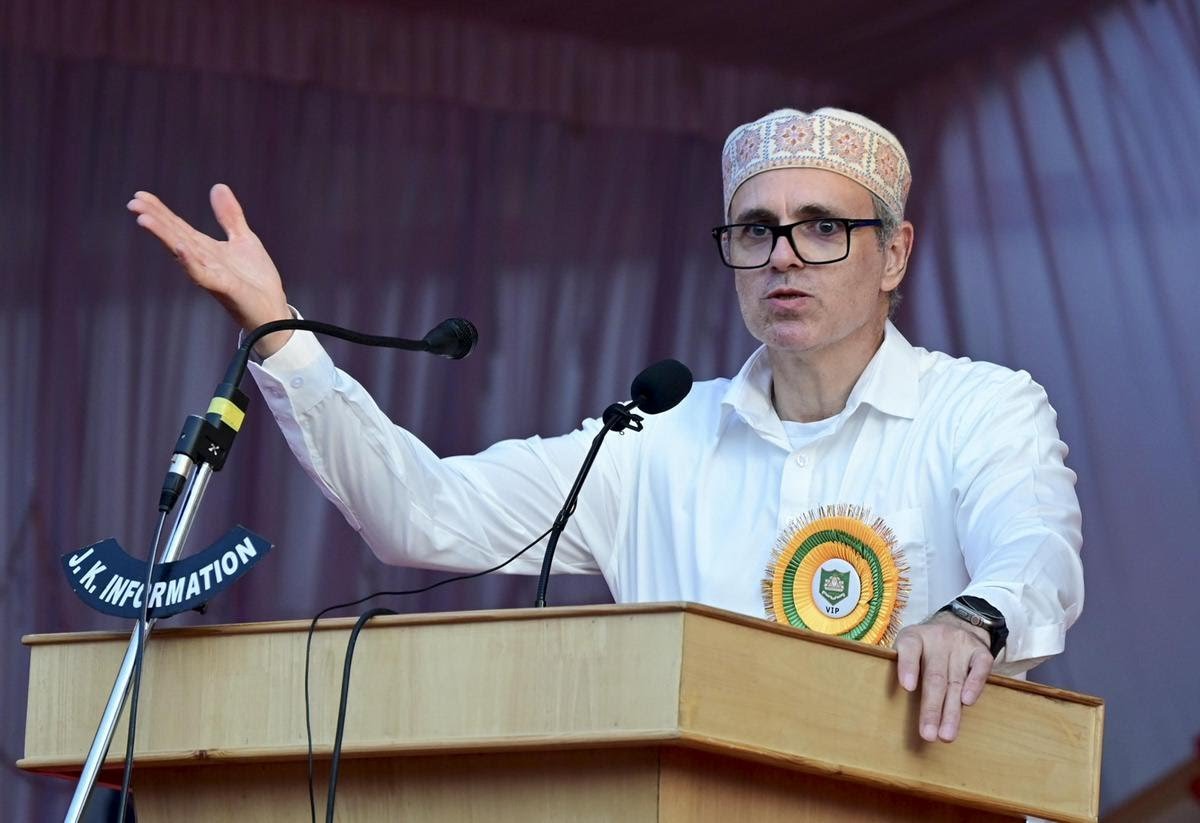
Source TOI
In a fresh political flashpoint over the Uniform Civil Code (UCC), Jammu and Kashmir National Conference leader Omar Abdullah has accused the Bharatiya Janata Party (BJP) of attempting to implement the contentious reform through indirect means rather than introducing comprehensive legislation in Parliament.
Speaking to reporters, Abdullah criticized what he described as a “backdoor approach,” arguing that any move to introduce a Uniform Civil Code—aimed at replacing personal laws governing marriage, divorce, inheritance, and adoption across religions—should be done transparently through parliamentary debate and due legislative process. He emphasized that such a significant reform requires consensus-building and open discussion, rather than piecemeal or state-level initiatives.
The remarks come amid increasing debate over the UCC, a long-standing agenda item for the BJP. In recent months, several BJP-ruled states have taken steps toward examining or drafting provisions related to a uniform civil framework, sparking concerns among opposition parties that the Centre may be encouraging states to act independently instead of bringing a unified bill before Parliament.
Abdullah warned that bypassing Parliament undermines democratic principles and risks deepening social divisions. “If the government believes the UCC is necessary, it should have the courage to present a bill in Parliament and engage with all stakeholders,” he said. He also questioned the timing and intent behind the current efforts, suggesting they may be politically motivated ahead of upcoming elections.
The BJP, however, has consistently defended its stance, arguing that the UCC is a constitutional directive principle aimed at ensuring equality and justice for all citizens, irrespective of religion. Party leaders maintain that consultations are ongoing and that the goal is to build broad consensus before any nationwide implementation.
Legal experts note that while states can legislate on certain civil matters, a comprehensive Uniform Civil Code would likely require central legislation to ensure uniformity across the country. This has added weight to opposition demands for a parliamentary route, where the proposal can be debated in detail and subjected to scrutiny by lawmakers.
The issue has once again highlighted the broader ideological divide between the ruling party and the opposition. While the BJP frames the UCC as a step toward gender justice and national integration, critics argue that its implementation must be handled with sensitivity in a diverse society like India, where personal laws are deeply intertwined with religious and cultural practices.
As the debate intensifies, the question of how—and where—the Uniform Civil Code should be introduced is likely to remain at the center of political discourse, with both sides gearing up for a prolonged confrontation over one of India’s most debated policy proposals.









