Source The Hindu
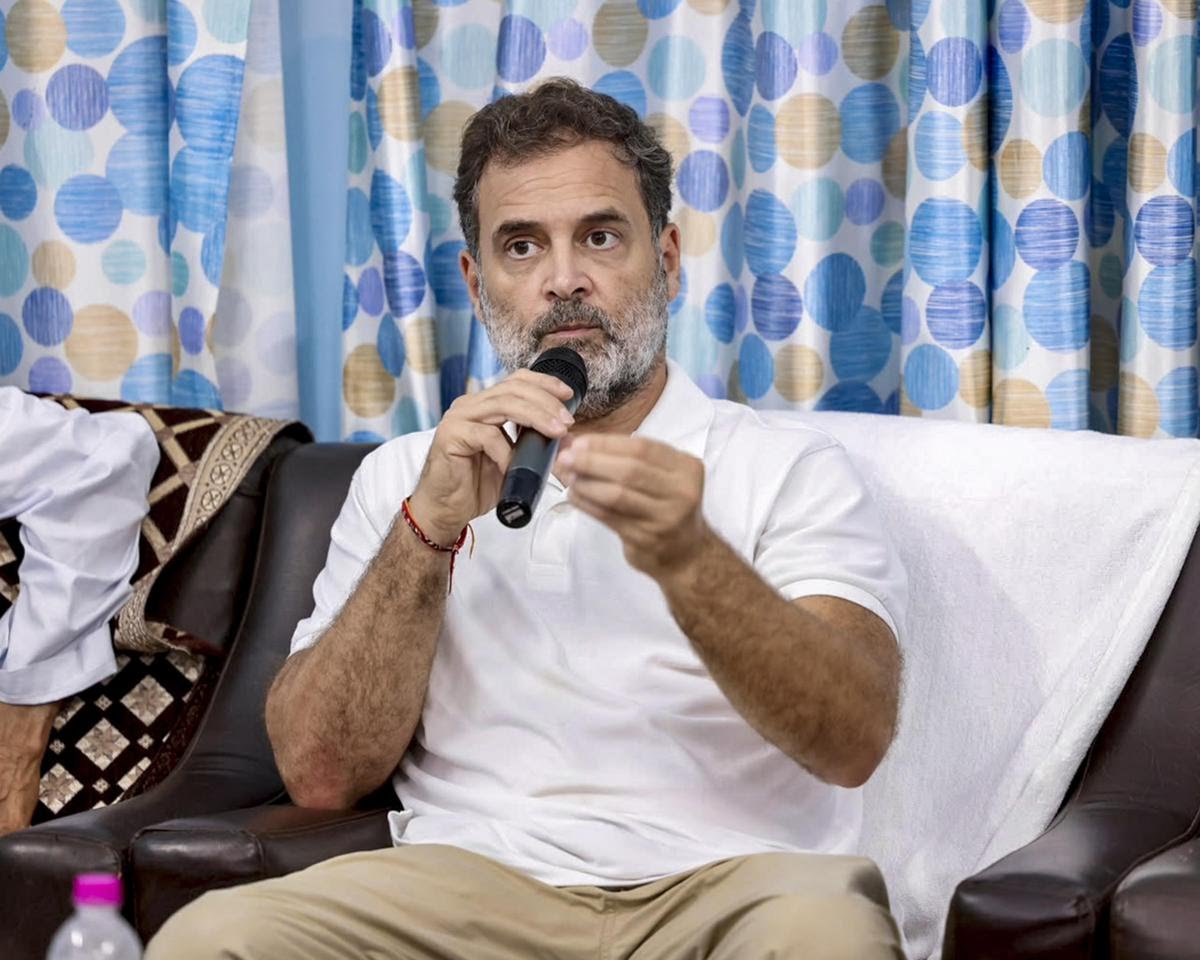
In a sharp political attack, Congress leader Rahul Gandhi on Wednesday accused the central government of compromising national interests, alleging that the Prime Minister had “decided to prostrate before former US President Donald Trump” in the context of the recent decision to impose charges on certain Unified Payments Interface (UPI) transactions.
The controversy comes after reports that the government has ended the zero-fee regime for large merchant UPI payments, a move that has sparked debate among political leaders, industry stakeholders, and digital payment users across the country. While the government has defended the step as necessary for sustaining the digital payments ecosystem, opposition parties have questioned both the timing and the intent behind the decision.
Addressing a public gathering, Rahul Gandhi claimed that the move reflects external pressure and undermines India’s financial independence. He argued that UPI, which has been widely celebrated as a successful indigenous digital payment system, should not be subjected to policies that could limit its accessibility or increase costs for users and small businesses.
“The government is weakening a system that empowered millions of Indians,” Gandhi said, adding that any charges on digital transactions could discourage adoption, particularly among small merchants and rural users who have only recently transitioned to cashless payments.
The government, however, has rejected these allegations, stating that the revised framework applies primarily to high-value merchant transactions and is aimed at ensuring long-term sustainability of the digital payments infrastructure. Officials have emphasized that person-to-person transactions will remain free and that the policy is designed to balance innovation with economic viability.
Industry experts have offered mixed reactions. While some believe that nominal charges could help maintain and upgrade payment systems, others warn that even small fees may reduce transaction volumes and affect India’s rapidly growing digital economy.
The UPI platform has witnessed exponential growth over the past few years, becoming one of the most widely used digital payment systems globally. Any policy change affecting it is likely to have significant economic and political implications.
As the debate intensifies, the issue is expected to remain a key point of contention between the government and opposition parties, especially with upcoming elections on the horizon.