Source CNBC
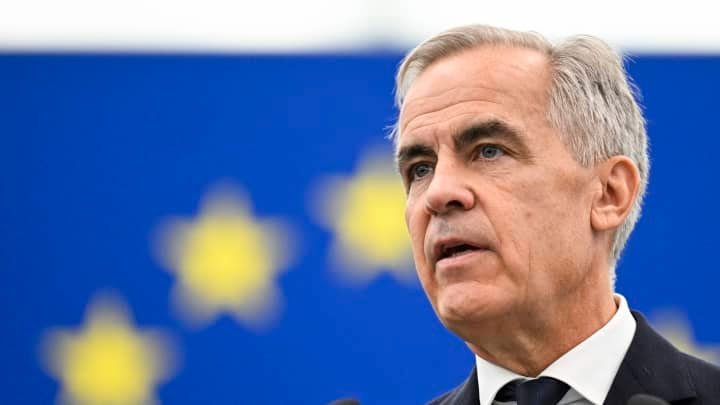
STRASBOURG — Canadian Prime Minister Mark Carney defended Canada’s right to chart its own geopolitical and economic destiny on Thursday, pushing forward with a proposed alliance with the European Union despite U.S. President Donald Trump dismissing the arrangement as “laughable” and threatening sweeping retaliatory measures.
Addressing members of the European Parliament in Strasbourg, Carney welcomed proposals to elevate Canada’s relationship with Brussels to unprecedented levels—potentially making Canada the bloc’s first formal “associate member”. The visit followed an invitation delivered Wednesday by European Commission President Ursula von der Leyen, who called for a comprehensive transatlantic pact spanning clean tech, defense integration, critical minerals, and energy security.
Carney rejected assertions that closer alignment between Ottawa and Brussels is an antagonistic maneuver, framing the initiative as an exercise in national resilience and economic sovereignty.
“Europe and Canada are each strong. Europe and Canada are even stronger together,” Carney told European lawmakers. While avoiding direct mention of Trump by name, Carney took clear aim at recent American economic pressure, warning that global interdependence is increasingly being leveraged as leverage against long-standing partners.
“Economic integration is now being weaponized, tariffs being used to exert pressure,” Carney said. “Financial mechanisms have been used for coercion. Supply chains constitute weak points to be exploited”.
The push into Europe comes during a historic low point in U.S.-Canada relations, exacerbated by collapsed bilateral trade discussions, Canadian retaliatory tariffs, and persistent tariff threats from Washington.
Speaking to reporters en route to North Carolina on Wednesday, President Trump derided the prospect of Canada joining Europe’s orbit, warning that the U.S. could halt trade or impose heavy duties on European goods if he viewed the partnership as hostile.
“If they do that, if I think it’s at all a hostile act, I will put very serious tariffs or stop trading with Europe on many things,” Trump said. “If it’s a good intention, that’s fine. If it’s a bad intention, we’ll put very heavy tariffs on Europe”.
European officials quickly rebuffed the White House’s rhetoric. A European Commission spokesperson stressed that expanding ties with Canada “is not against anyone else, but for our common strength,” while French Europe Minister Benjamin Haddad insisted that Washington holds no veto over European foreign policy decisions.
Carney clarified that Canada is not seeking full EU membership, which remains reserved for European nations, but rather a structured, strategic alignment that shields domestic industries from external volatility. The prime minister also pointed to expanding security cooperation beyond traditional North American frameworks, noting Ottawa’s recent formal application to join the U.K.-led Joint Expeditionary Force (JEF).
“We do not seek power to dominate others,” Carney said. “On the contrary, we are pursuing resilience so no one can control our open markets, impair our sovereignty, threaten our territorial integrity, or undermine our freedoms”.
Negotiators from Ottawa and Brussels are scheduled to outline concrete frameworks for the strategic partnership ahead of an EU-Canada bilateral summit in Montreal this October.