
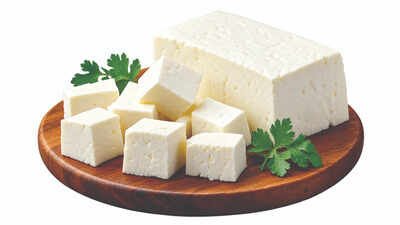
Source TOI
If you love digging into a steaming plate of matar paneer or grabbing a paneer roll on your way home, your food might soon come with far more honesty. India’s food safety regulator, the Food Safety and Standards Authority of India (FSSAI), has stepped in to stop non-dairy copies from posing as genuine paneer.
Under a new draft proposal, if a product is not made directly from milk, sellers cannot call it “paneer” anywhere—not on the packet, not in advertisements, and not on restaurant menus.
What Exactly Is “Analogue” Paneer?
Real paneer requires fresh milk curdled with lemon juice, vinegar, or citric acid. That is all.
However, many food outlets and bulk caterers use an imitation version known in the food industry as dairy analogue. This substitute looks and feels remarkably like real paneer, but it replaces milk fat and milk protein with vegetable oils (most commonly palm oil), starches, and binding agents.
Because vegetable fat costs a fraction of dairy milk fat, making imitation paneer costs roughly ₹180 to ₹200 per kilogram, while authentic dairy paneer typically sells for ₹350 to ₹500 per kilogram.
The Loophole FSSAI Is Closing
Under current rules, companies could legally manufacture these vegetable-fat blocks under the broad category of “dairy analogues”. The problem? Once these blocks left the factory, they were routinely sold over the counter or served in dishes simply as “paneer,” without telling customers what they were actually eating.
The proposed amendment to the Food Safety and Standards Regulations makes the rule clear:
Any product licensed under the dairy analogue category must immediately drop the word Paneer from its brand name, packaging, and marketing.
The term “paneer” will be reserved strictly for products crafted entirely from milk.
Restaurants, cafes, and catering services using cheese or paneer substitutes will have to display that fact openly on their menu cards and dining counters.
Why This Matters for Your Health and Wallet
While dairy substitutes made with food-grade oils are not necessarily toxic poisons, selling them quietly under the name of paneer misleads shoppers in two big ways:
Missing Nutrients: Authentic paneer is a staple protein and calcium source, especially for vegetarians. Imitation versions often pack heavy doses of refined vegetable fats and starch, offering far less quality protein.
Paying Full Price for Cheap Swaps: Diners pay premium rates for rich dairy dishes while eating low-cost vegetable oil blocks.
What Happens Next?
The proposal follows statewide crackdowns earlier this year in Maharashtra and Gujarat, where food inspectors discovered that more than a third of tested market samples failed dairy standards. FSSAI has opened a 60-day window to gather feedback and objections from businesses and the public before rolling out the regulation across all states.
Once finalized, your neighborhood grocery store and favorite curry spot will have to call imitation blocks what they truly are—leaving the name “paneer” for the real thing.









