Source Live law
New Delhi — A major controversy has reached the Supreme Court of India over whether a sitting judge should have stepped aside from a high-profile case involving the country’s top election body.
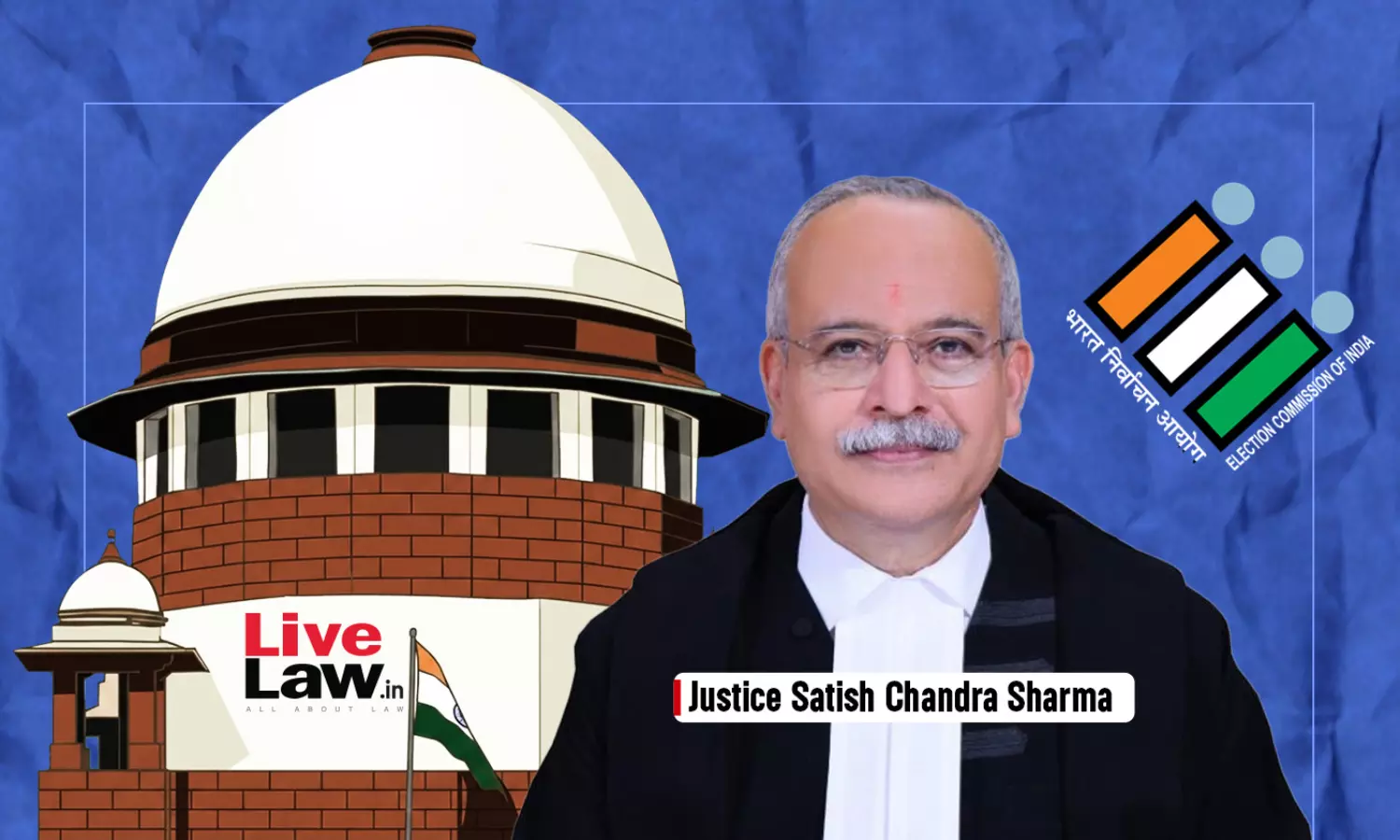
A petitioner has formally approached the top court requesting that an earlier ruling be withdrawn because Justice Satish Chandra Sharma did not mention that his son works as a lawyer representing the Election Commission of India (ECI).
What Is the Case About?
The core dispute centers on how India picks its top election officials.
Last month, a two-judge Supreme Court bench—comprising Justice Dipankar Datta and Justice Satish Chandra Sharma—delivered a split verdict on a challenge to the 2023 law governing appointments of the Chief Election Commissioner (CEC) and other Election Commissioners.
Under the contested law, the selection committee includes the Prime Minister, a Union Cabinet Minister, and the Leader of the Opposition, leaving out the Chief Justice of India. Because the two judges held differing views on how the matter should proceed, they directed the case records to be placed before the Chief Justice of India to decide whether a larger Constitution Bench should take over.
The Fresh Objection
Shortly after the order was delivered, media reports and public court records revealed that Justice Sharma’s son, advocate Siddharth Sharma, has been serving as a standing counsel for the Election Commission before the Madhya Pradesh High Court since July 2024.
Armed with these records, the petitioner filed an application arguing that:
No Disclosure Was Made: The courtroom was never informed during hearings that an immediate family member had a formal professional relationship with the poll body.
Fairness Must Be Visible: It does not matter whether actual favoritism occurred. In the eyes of a regular citizen, a judge hearing a dispute connected to an institution that employs his child raises reasonable doubts about fairness.
Judicial Code of Conduct: Judges are guided by strict ethical principles requiring them to avoid hearing matters where close family members represent or are closely tied to the parties involved.
The plea requests that Justice Sharma’s opinion be recalled and the case be reassigned to ensure complete public trust in the proceedings.
What Happens Next?
The Chief Justice of India has agreed to examine the application and decide the next course of action. The issue places the spotlight back on judicial transparency, highlighting that for the justice system to work, fairness must not only exist—it must be clearly seen by everyone.