Source The Hindu
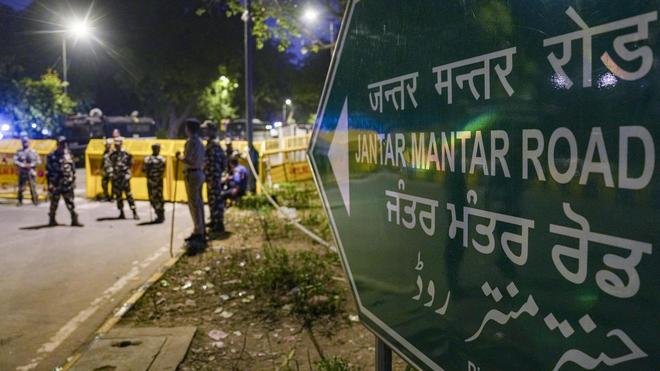
For decades, the narrow stretch of road near Jantar Mantar served as the heart of India’s public voice. From students and farmers to anti-corruption crusaders and civil rights workers, thousands gathered here to make themselves heard by the country’s top leaders. That chapter has come to an abrupt end.
The Delhi Police officially removed Jantar Mantar from its list of designated protest venues, barring public rallies and demonstrations at the iconic spot. The decision has triggered widespread criticism from activists, political observers, and civil rights groups.
What Did the Police Decide?
According to a notification issued by Delhi Police, the move follows recommendations made by a special committee set up by the Ministry of Home Affairs to find alternative spots for public gatherings.
Officials announced three new designated demonstration sites across the national capital:
Ramlila Ground in central-north Delhi
Burari Ground in north Delhi
CBD Ground in Shahdara, east Delhi
Authorities stated that fresh standard operating guidelines will soon be released to explain how groups can seek permission to hold rallies at these alternative locations. Officials cited traffic congestion, security concerns in high-security central Delhi, and daily disruptions to nearby businesses and government offices as key reasons for shifting demonstrators away from the city center.
Why Jantar Mantar Mattered So Much
Jantar Mantar was never just an ordinary road. Located barely a kilometer from Parliament House and central government ministries, its location gave everyday citizens a sense of direct reach. When people shouted slogans here, they felt the decision-makers could actually hear them.
Over the years, the site witnessed landmark moments in modern Indian history. It hosted the massive anti-corruption movement in 2011, emotional public outcries after the 2012 Nirbhaya incident, protests by top Indian wrestlers, and demonstrations by youth against exam leaks. It was a space where small groups with forgotten causes could sit alongside nationwide campaigns and draw national media attention.
Outrage from Activists and Citizens
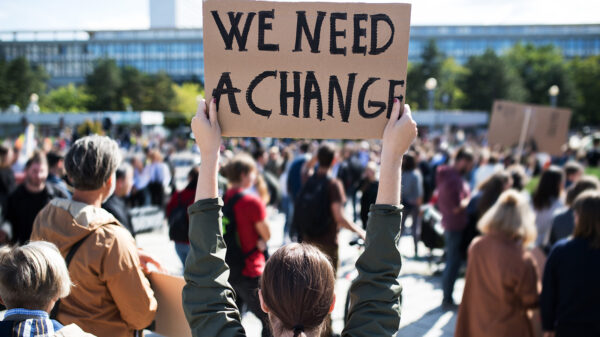
The sudden order sparked sharp reactions from activists, students, and opposition figures. Many view the shift as an attempt to push dissent out of sight.
Critics argue that moving protests to outlying areas like Burari or Shahdara defeats the purpose of peaceful public demonstrations. “A protest works because it is visible and reaches the people in power,” said one civil rights campaigner. “Banishing ordinary citizens to distant grounds away from the power center simply tucks our voices into a corner where they can be ignored.”
Others pointed out that peaceful protest is a core democratic right. By moving rallies far from Parliament and ministerial corridors, many fear that the common citizen’s voice in the national capital will become much harder to hear.