Source The Hindu
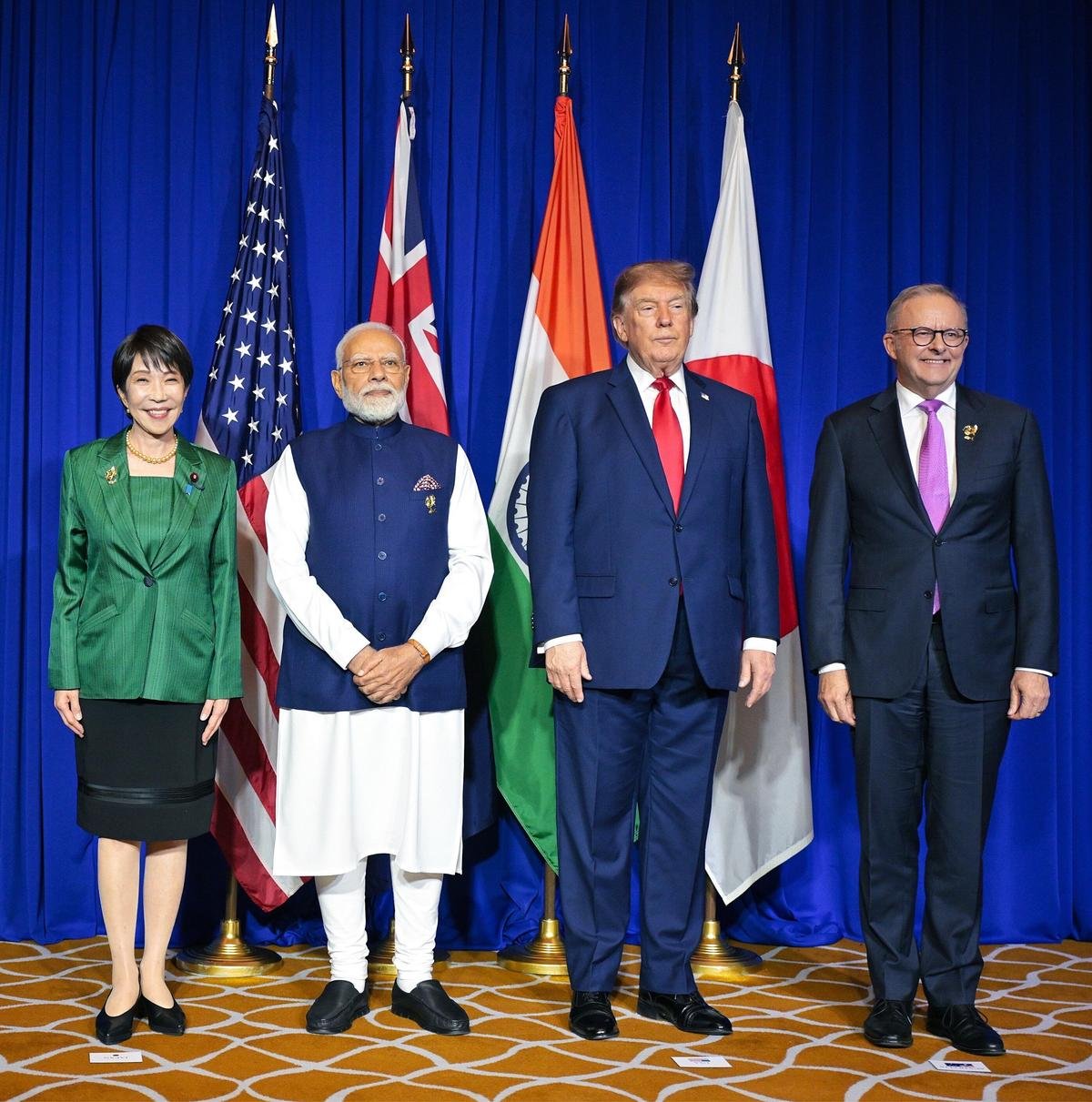
MANILA, Philippines — On the sidelines of the 49th ASEAN Summit in Manila today, leaders of the Quadrilateral Security Dialogue (Quad)—India, the United States, Australia, and Japan—unveiled a sweeping package of security and technology initiatives aimed at keeping the Indo-Pacific peaceful, connected, and resilient.
Meeting in person for the first time since 2024, Indian Prime Minister Narendra Modi, U.S. President Donald Trump, Australian Prime Minister Anthony Albanese, and Japanese Prime Minister Sanae Takaichi outlined concrete steps to police busy sea lanes, build trustworthy artificial intelligence, and shield digital infrastructure from rising cyber threats.
Eyes on the Ocean: Joint Maritime Patrols
A major highlight of the summit is a new push to keep Indo-Pacific waters safe and open for global trade. The four nations announced the Indo-Pacific Maritime Surveillance Collaboration, an intelligence-sharing network designed to give regional countries a clearer, real-time picture of ship movements and maritime activity.
Taking that cooperation into the skies, the leaders revealed that their militaries will conduct a first-of-its-kind Quad maritime exercise in 2027. The drill will bring together P-8 and P-3C maritime patrol aircraft from all four nations to practice coordinated monitoring across vital shipping routes.
Protecting Digital Borders and Advancing AI
Recognizing that modern security extends far beyond physical borders, the Quad rolled out Enhanced Quad Cybersecurity Cooperation to combat a sharp rise in regional cyberattacks. Alongside new plans to protect critical undersea internet cables, the four countries are pooling resources to keep digital networks open and secure.
On the technology front, the leaders backed the AI Accelerator, a coordinated program built to fund and deploy “trusted AI” across the Indo-Pacific. Rather than leaving smaller nations behind in the tech boom, the initiative will provide technical assistance and safe, reliable artificial intelligence tools to help regional economies grow.
A Pushback Against Coercion and a Boost for Business
Without naming specific countries, the joint statement sent a clear warning against “destabilising or unilateral actions” and “economic coercion,” such as sudden, arbitrary export bans on critical goods. To prevent supply chain shocks, the Quad pledged to work closely on securing critical minerals and clean energy.
To turn government pledges into real-world economic growth, the leaders also announced the inaugural Quad Business Leaders’ Forum, which India will host in early 2027. The forum will bring private-sector executives and policymakers together to spark commercial deals and create jobs.
Reaffirming Regional Unity
Throughout the Manila talks, the Quad emphasized that it is not trying to overshadow Southeast Asian neighbors, reiterating “unwavering support for ASEAN centrality and unity”. Prime Minister Modi described the grouping as a “constructive and trusted partnership” focused on delivering practical solutions. As global tensions test the region, the Manila summit signals that the Quad is moving from broad diplomatic talks to hands-on action on the water, in the cloud, and in the marketplace.