Source money control
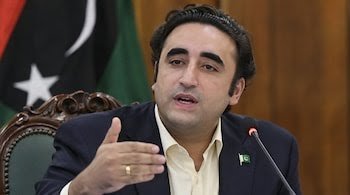
A major political fight has broken out in Pakistan over a growing push to redraw the country’s map. Bilawal Bhutto-Zardari, chairman of the Pakistan Peoples Party (PPP), has issued a stark warning to the federal government: any forced attempt to divide Sindh province could trigger deadly violence in Karachi.
Speaking to reporters in Karachi, Bhutto-Zardari made it clear that while his party is not completely against creating new provinces in the country, breaking up Sindh without local support would lead to deep anger and bloodshed.
What is the 14-Province Plan?
Right now, Pakistan is made up of four main provinces: Punjab, Sindh, Khyber Pakhtunkhwa, and Balochistan. Recently, top government figures—including Interior Minister Mohsin Naqvi, Defence Minister Khawaja Asif, and Planning Minister Ahsan Iqbal—have floated the idea of breaking these four large regions into smaller parts.
According to Planning Minister Ahsan Iqbal, the plan being discussed could split the country into 14 smaller administrative units:
Punjab: Divided into 4 provinces
Sindh: Divided into 4 provinces
Khyber Pakhtunkhwa: Divided into 3 provinces
Balochistan: Divided into 3 provinces
Supporters of the plan argue that Pakistan’s population has grown too large to be managed effectively under the old system. They say smaller provinces would bring government services closer to ordinary people and improve day-to-day management. Interior Minister Mohsin Naqvi even suggested holding a public vote, or referendum, to ask citizens if they want new provinces.
Why is Karachi at the Center of the Fight?
For Bilawal Bhutto-Zardari and his party, the biggest fear is what this plan means for Sindh and its capital, Karachi.
Karachi is Pakistan’s largest city, its main port, and its financial engine. The PPP has ruled Sindh continuously since 2008, making the province its strongest political base. Splitting Sindh into four parts would likely separate Karachi from the rest of the province. Critics say this would strip Sindh of its main source of money and weaken the PPP’s political power.
Beyond politics, dividing Sindh touches a raw cultural nerve. Many Sindhi people view their province as a historic homeland and see any plan to carve it up as an attack on their identity and rights.
A Clash Over Rules and Respect
Bhutto-Zardari is also angry about how the plan is being pushed. Even though the PPP is a key partner in the ruling coalition, Bhutto-Zardari said neither Prime Minister Shehbaz Sharif nor anyone else discussed the plan with him or his father, President Asif Ali Zardari.
He also rejected the idea of using a public referendum to redraw borders, pointing out that Pakistan’s Constitution has strict legal steps that require approval from elected assemblies. In September 2026, the Sindh Assembly already passed a formal resolution firmly rejecting any division of the province.
For now, the 14-province proposal remains just a topic of fierce debate rather than an official government policy. However, Bhutto-Zardari’s sharp warning shows that any move to change Sindh’s borders could fracture Pakistan’s ruling alliance and spark serious unrest on the streets.