Source Reuters
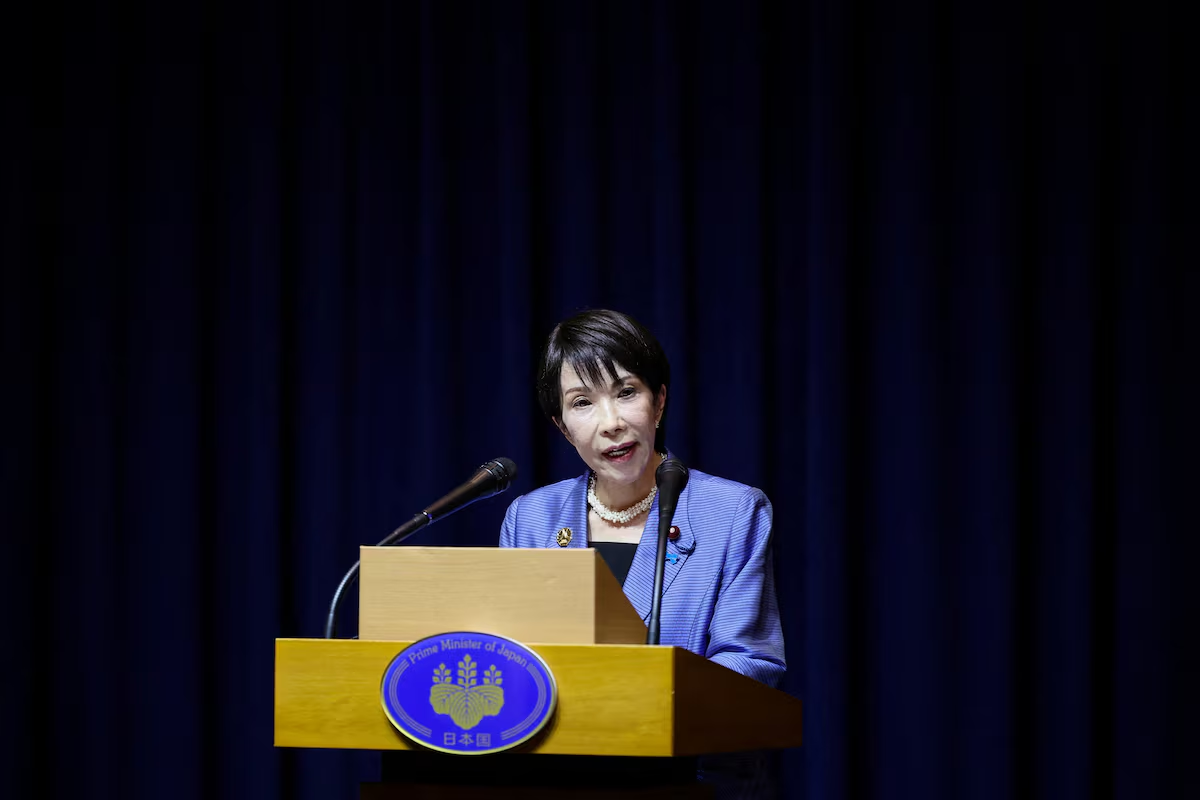
United Nations, New York – The ongoing diplomatic friction between China and Japan escalated this week as Beijing brought its grievances regarding Taiwan to the United Nations. Chinese Ambassador to the UN, Zhang Jun, addressed the General Assembly, accusing Japan of interfering in China’s internal affairs and vowing to defend its sovereignty and territorial integrity “by any necessary means.”
The move comes amidst heightened tensions in the East China Sea and growing international concern over the status of Taiwan, which China views as an inseparable part of its territory. Japan, while officially recognizing the “One China” policy, has expressed increasing alarm over China’s military activities near Taiwan and has reiterated its commitment to peace and stability in the region.
Ambassador Zhang’s address was a strongly worded condemnation of what he described as Japan’s “provocative actions” and “dangerous rhetoric” concerning Taiwan. He asserted that “Taiwan is an inalienable part of China’s territory, and the Taiwan question is purely China’s internal affair. No external force has the right to interfere.” Zhang warned that any attempt to challenge this principle would be met with a resolute response from Beijing.
While not explicitly detailing what “necessary means” would entail, the statement was widely interpreted as a veiled warning against any Japanese military involvement in a potential conflict over Taiwan. Analysts suggest that China’s decision to raise the issue at the UN is a strategic move to garner international support for its position and to further isolate Japan on the matter.
Japan’s Ambassador to the UN, Ishikane Kimihiro, is expected to respond to China’s accusations in the coming days. Tokyo has consistently maintained that its actions are aimed at upholding international law and ensuring regional stability, and has urged all parties to resolve disputes peacefully through dialogue.
The United States, a key ally of Japan, has also been closely monitoring the situation. While Washington maintains strategic ambiguity regarding its direct military involvement in a Taiwan contingency, it has repeatedly emphasized its commitment to helping Taiwan defend itself and has condemned any unilateral attempts to change the status quo by force.
This latest development at the UN underscores the deepening rift between two of Asia’s largest economies and raises concerns about the potential for miscalculation and escalation in an already volatile region. The international community will be closely watching how this diplomatic spat unfolds, particularly given the broader implications for global peace and security.