
Source Mint
In a rare gesture reflecting institutional respect and administrative propriety, former Chief Justice of India (CJI) D.Y. Chandrachud’s successor, ex-CJI Justice B.R. Gavai, set a new precedent by leaving his official car at Rashtrapati Bhavan for the incoming CJI, Justice Surya Kant, as part of the smooth transition of office.
According to officials familiar with the development, Justice Gavai arrived at Rashtrapati Bhavan on the morning of the swearing-in ceremony and handed over the designated official vehicle to be used by the new Chief Justice immediately after taking oath. Traditionally, outgoing CJIs have used the car assigned to them until the end of the day or returned it later, but Justice Gavai’s move to leave the car directly at the venue is being seen as an unusual yet thoughtful step toward reinforcing administrative efficiency.
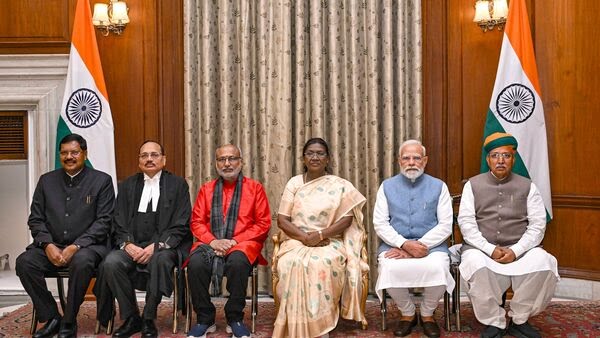
Justice Surya Kant, who took oath as the 51st Chief Justice of India, assumed office following the ceremony administered by President Droupadi Murmu. After the oath, he departed from Rashtrapati Bhavan in the same official vehicle, marking a seamless handover.
Legal experts and former judges have welcomed the gesture, stating that it reflects Justice Gavai’s “deep regard for the dignity of the office” and sets a positive institutional example. “This symbolic act underscores how constitutional functionaries can uphold traditions while also strengthening administrative discipline,” a senior Supreme Court official noted.
Justice Gavai, who served a relatively short tenure as CJI, is credited with handling several key matters and ensuring a smooth administrative framework during the transition period. Justice Surya Kant is expected to outline his priorities in the coming days, with judicial reforms, case backlog management, and technological upgrades likely to feature prominently in his agenda.
The symbolic gesture at Rashtrapati Bhavan has sparked conversation within legal circles about establishing formal protocols for transitions among top constitutional offices, though no official guidelines exist as of now.
With Justice Surya Kant now at the helm of the Supreme Court, stakeholders anticipate continuity in judicial functioning along with new initiatives under his leadership.









