
Source The Hindu
New Delhi: In a major push towards ‘Atmanirbhar Bharat’ (Self-Reliant India) and securing its critical supply chains, the Union Cabinet on Wednesday approved a ₹7,280-crore scheme to promote the domestic manufacturing of Sintered Rare Earth Permanent Magnets (REPM).
The initiative, titled the ‘Scheme to Promote Manufacturing of Sintered Rare Earth Permanent Magnets,’ marks the first significant government effort to establish an integrated REPM ecosystem in India, which is currently heavily reliant on imports for this strategically vital component.
Key Highlights of the Scheme
The scheme has been launched with a total financial outlay of ₹7,280 crore over a period of seven years. The primary objective is to create an indigenous manufacturing capacity of 6,000 Metric Tonnes Per Annum (MTPA) of finished REPMs.
Incentives Structure: The outlay comprises two main components:
Sales-Linked Incentives: ₹6,450 crore to be disbursed over five years based on the sale of REPMs.
Capital Subsidy: ₹750 crore for setting up the 6,000 MTPA manufacturing facilities.
Beneficiaries: Up to five companies will be selected through a global competitive bidding process, with each allocated a capacity of up to 1,200 MTPA.
Integrated Value Chain: The scheme mandates the creation of fully integrated manufacturing units covering the entire process: from converting rare earth oxides into metals, metals into alloys, and finally producing finished magnets.
Strategic Importance for Key Sectors
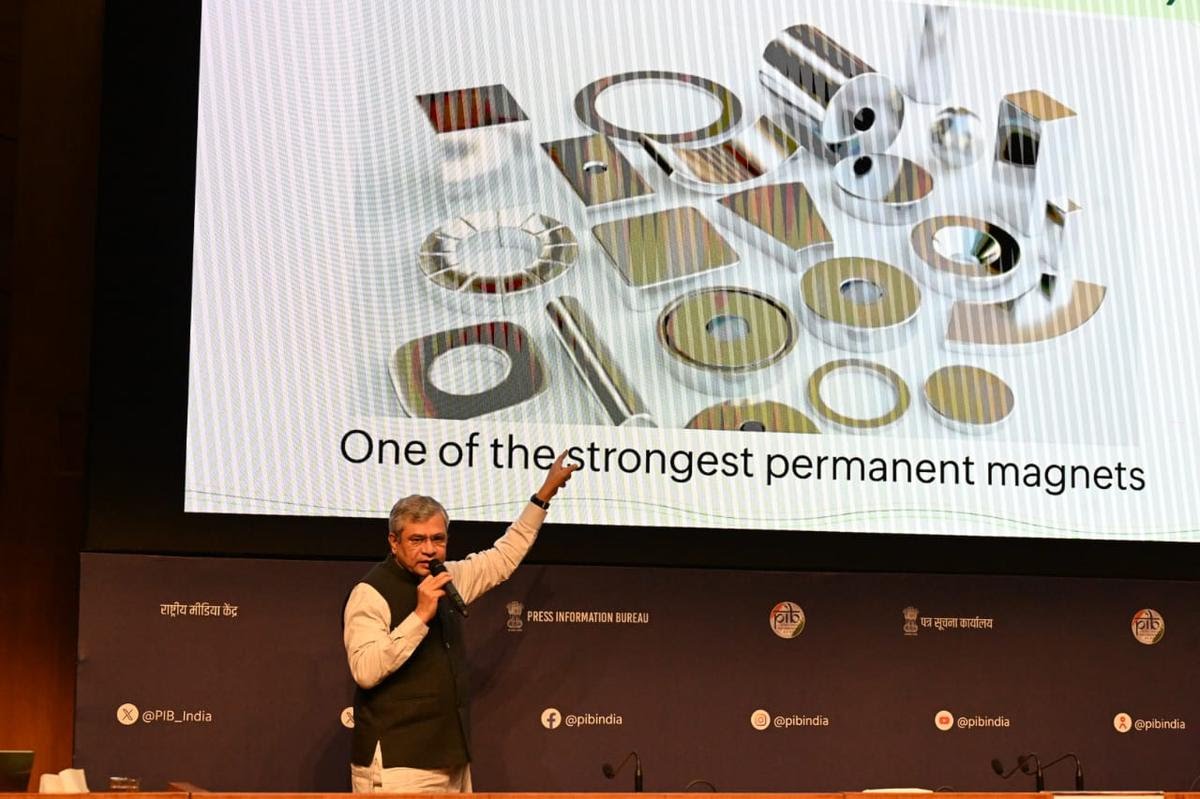
Rare Earth Permanent Magnets are among the most powerful magnets available and are essential components in a wide range of high-technology applications. Domestic manufacturing will significantly boost several critical sectors:
Electric Vehicles (EVs): REPMs are vital for traction motors in EVs.
Renewable Energy: They are key components in high-efficiency wind turbines and solar power systems.
Defence and Aerospace: Used in critical defence systems, guidance, and aerospace equipment.
Electronics: Essential for consumer electronics, industrial automation, and robotics.
This move aims to reduce India’s import dependence, particularly from a single country, thus fortifying national supply chain resilience against geopolitical risks.
Supporting India’s Net Zero Commitment
The scheme aligns directly with India’s long-term environmental and economic goals, specifically the target of achieving Net Zero carbon emissions by 2070.
By encouraging the local production of magnets essential for green technologies like EVs and wind energy, the government is ensuring a steady, secure supply chain for the nation’s energy transition. The initiative is also expected to generate significant employment and contribute to the vision of Viksit Bharat @2047 by developing a technologically self-reliant and globally competitive industrial base.









